

Case Study — Reverse Engineering & Mechanism Design
Aprilia V4 Swingarm Extension
Custom CNC swingarm extension plates and axle sliders for an Aprilia Tuono V4 — designed from laser scan data with no OEM drawings, validated through printed prototypes, and machined in aluminum.
The Problem
No OEM Extension. No Drawings. An Asymmetric Swingarm.
The Aprilia Tuono V4 uses a cast aluminum swingarm that is asymmetric — the passenger side is narrower than the drive side where the axle hardware mounts. No aftermarket swingarm extension existed for this platform. No drawings, no dimensional data, no reference geometry.
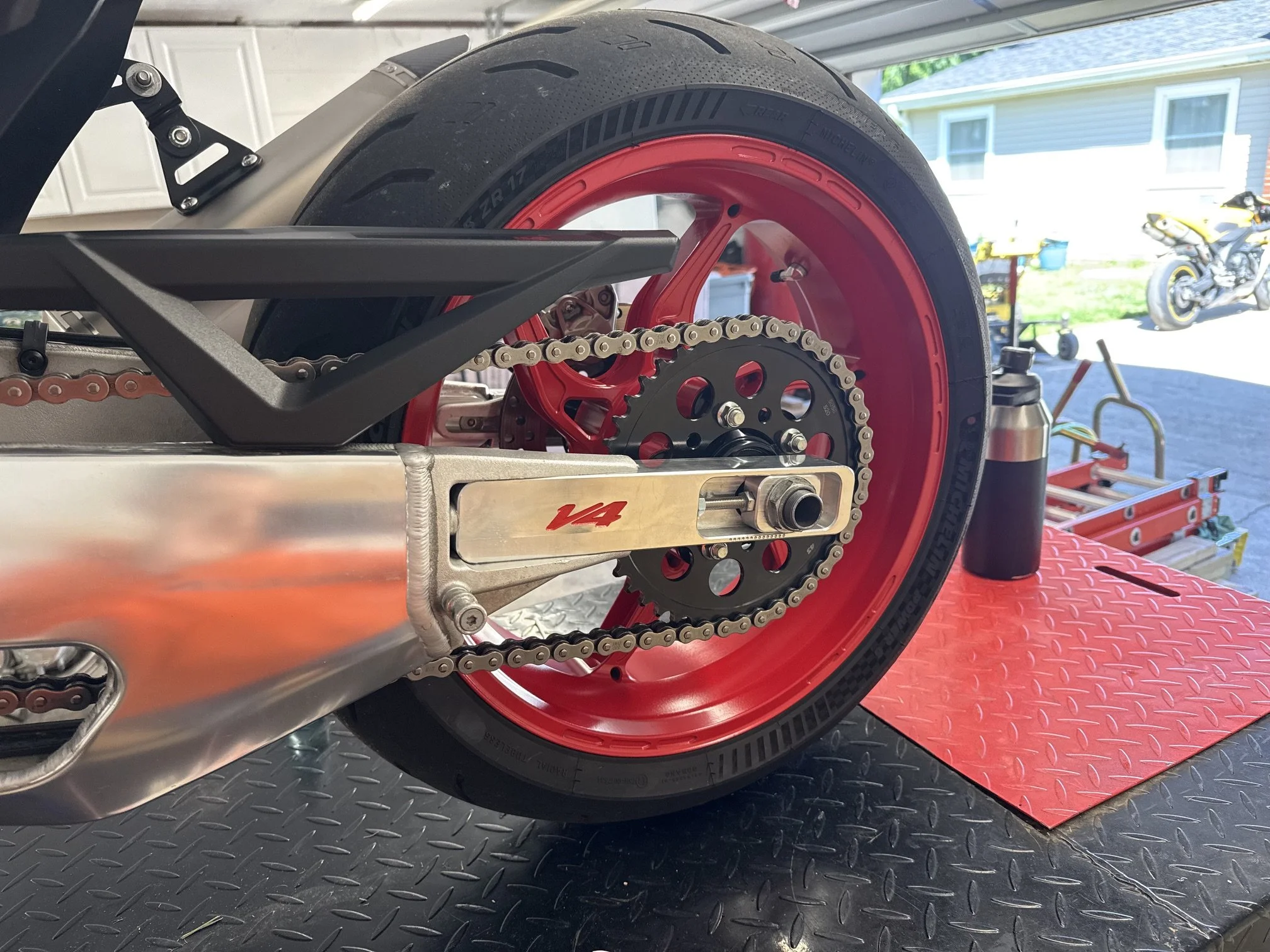
The client needed a 6-inch extension to the chain adjustment slot range, custom axle sliders to match the extended position, and hardware that worked with the existing caliper bracket without interference — all while maintaining the visual language of the OEM casting.
Our Approach
Scan First. Model Second. Print to Validate. Then Machine.
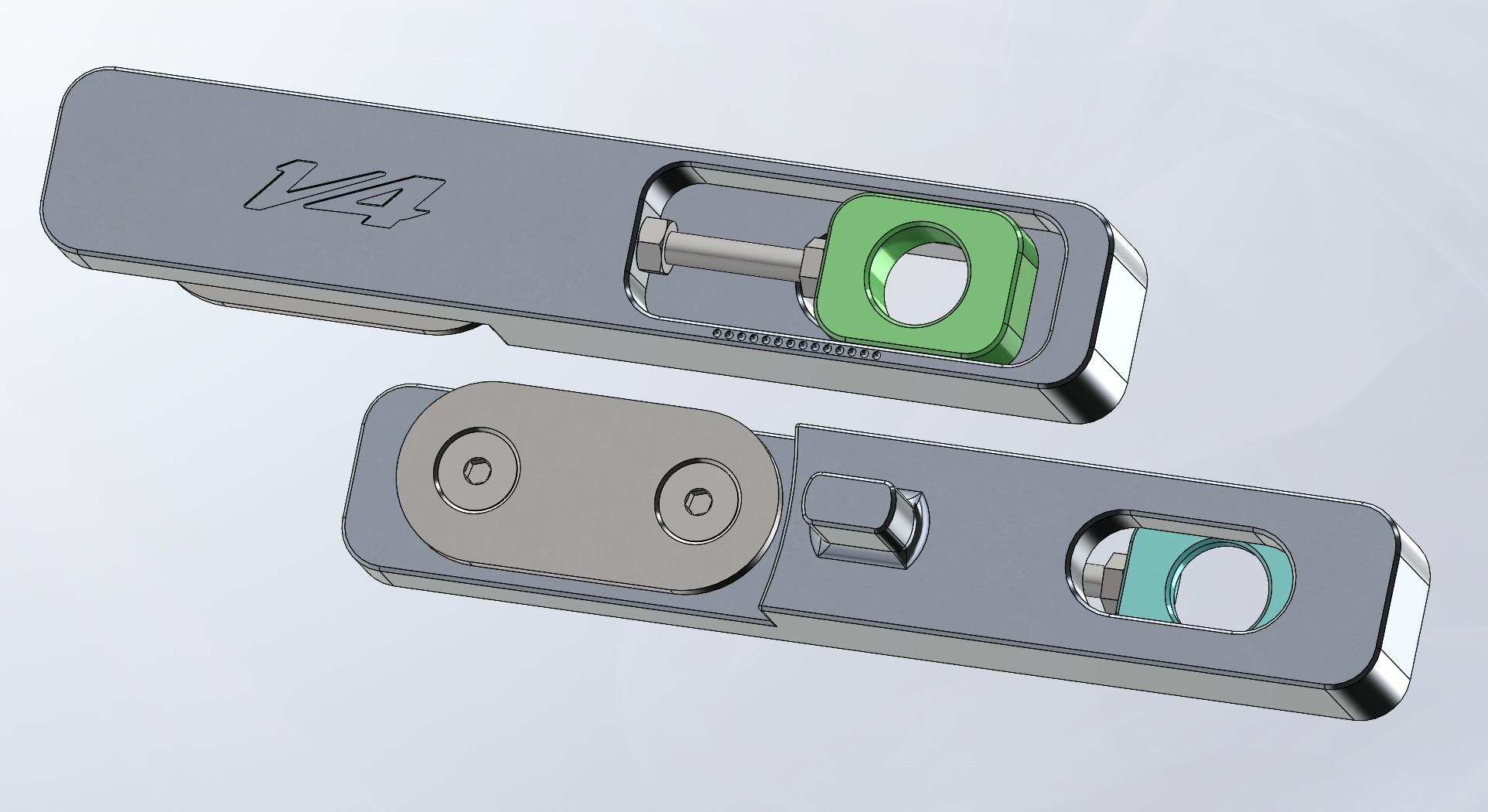
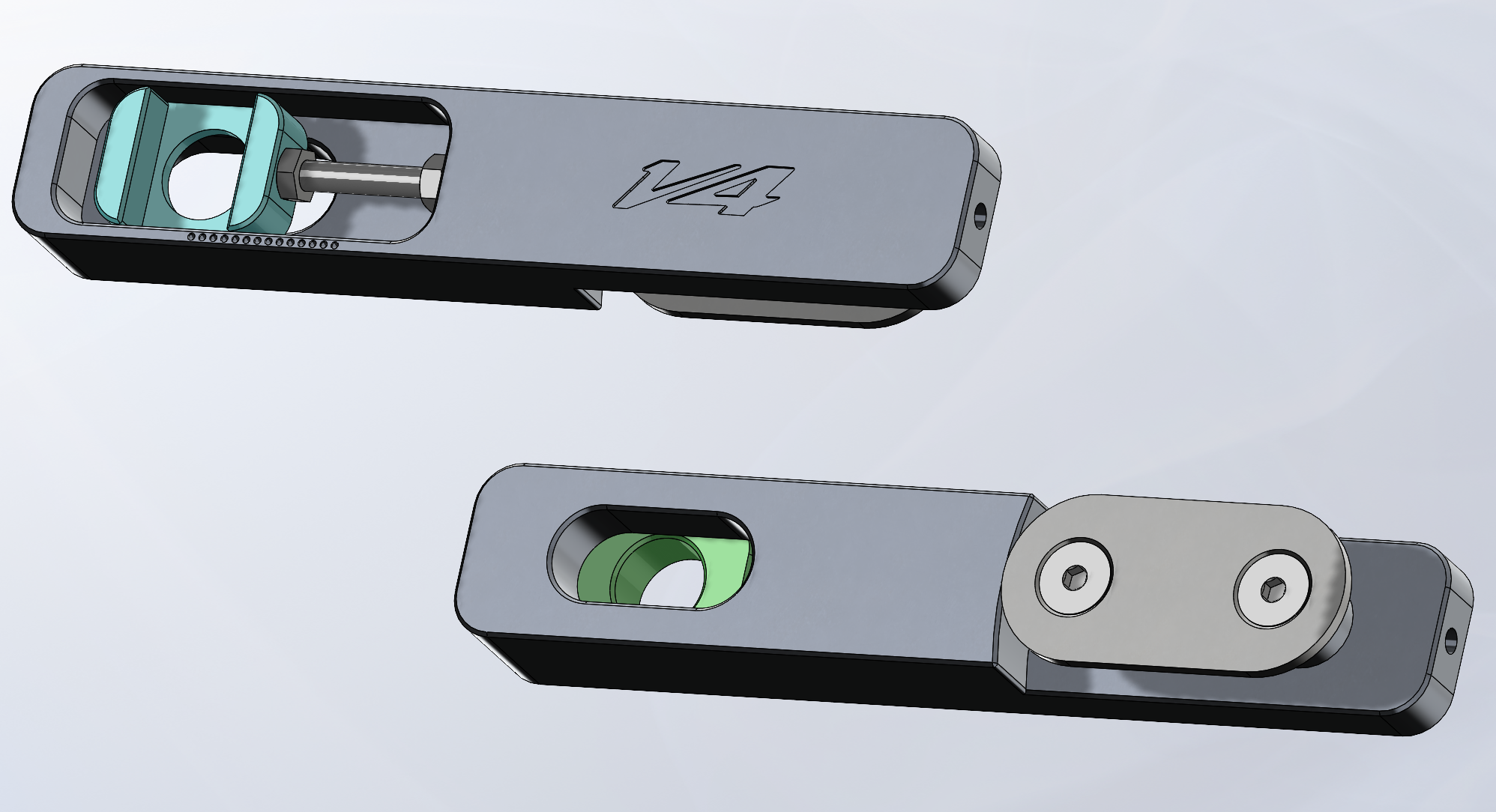
With no OEM drawings, the geometry came from the part itself — a HandyScan Black Elite scan at ±0.025mm became the foundation for a fully parametric SolidWorks assembly. The extension was designed as interlocking plates that bolt to the existing swingarm structure, extending the chain adjustment slot by 6 inches across two positions: stock location and 1.25 inches further back. Before any metal was cut, full-scale FDM prototypes were shipped to the client for fitment validation — a step that proved critical.
| Scanner | Creaform HandyScan Black Elite — ±0.025mm NIST-traceable |
| CAD software | SolidWorks 2026 Professional |
| Extension offset | 6 inches (new slot) — 1.25 in additional adjustment |
| Total adj. range | 2.25 inches (stock + new position) |
| Material specified | 7075 aluminum (extensions) · 17-4PH stainless (axle sliders) |
| Axle slider fit | 25.05mm nominal — confirmed against 25.03mm aftermarket adjuster |
| Hat flange | Reduced to 4mm to clear caliper bracket — confirmed in 3D assembly |
| Engraving | "V4" — min inside corner radius 0.5mm for 1mm end mill tool path |
| Prototype method | FDM — Bambu printer — dispatched same day as print completion |
| Machined by | One Ten Machining |
Deliverables Package
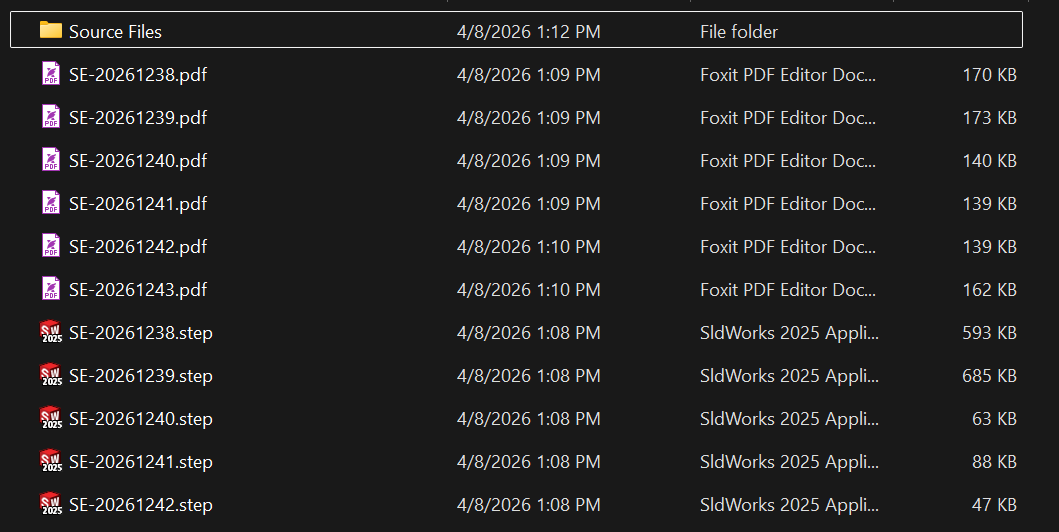
Complete deliverables package — SolidWorks native files, STEP/IGES exports, and GD&T manufacturing drawings
Engineering Detail
The Asymmetry Problem — Caught in Prototype
The Aprilia Tuono V4 swingarm is 4mm narrower on the passenger side than the drive side at the hat mounting face — undocumented, and only discovered when the first prototype was fitted on the bike. Photos confirmed the interference; the extension plate was corrected by 4mm, a new prototype dispatched, and the corrected geometry was verified before final drawings were released.
The caliper bracket was also modeled in SolidWorks and confirmed to clear the hat flange at 4mm thickness — the original 5mm design created a collision. 3D modeling the full assembly, including the caliper, is what caught this before machining.
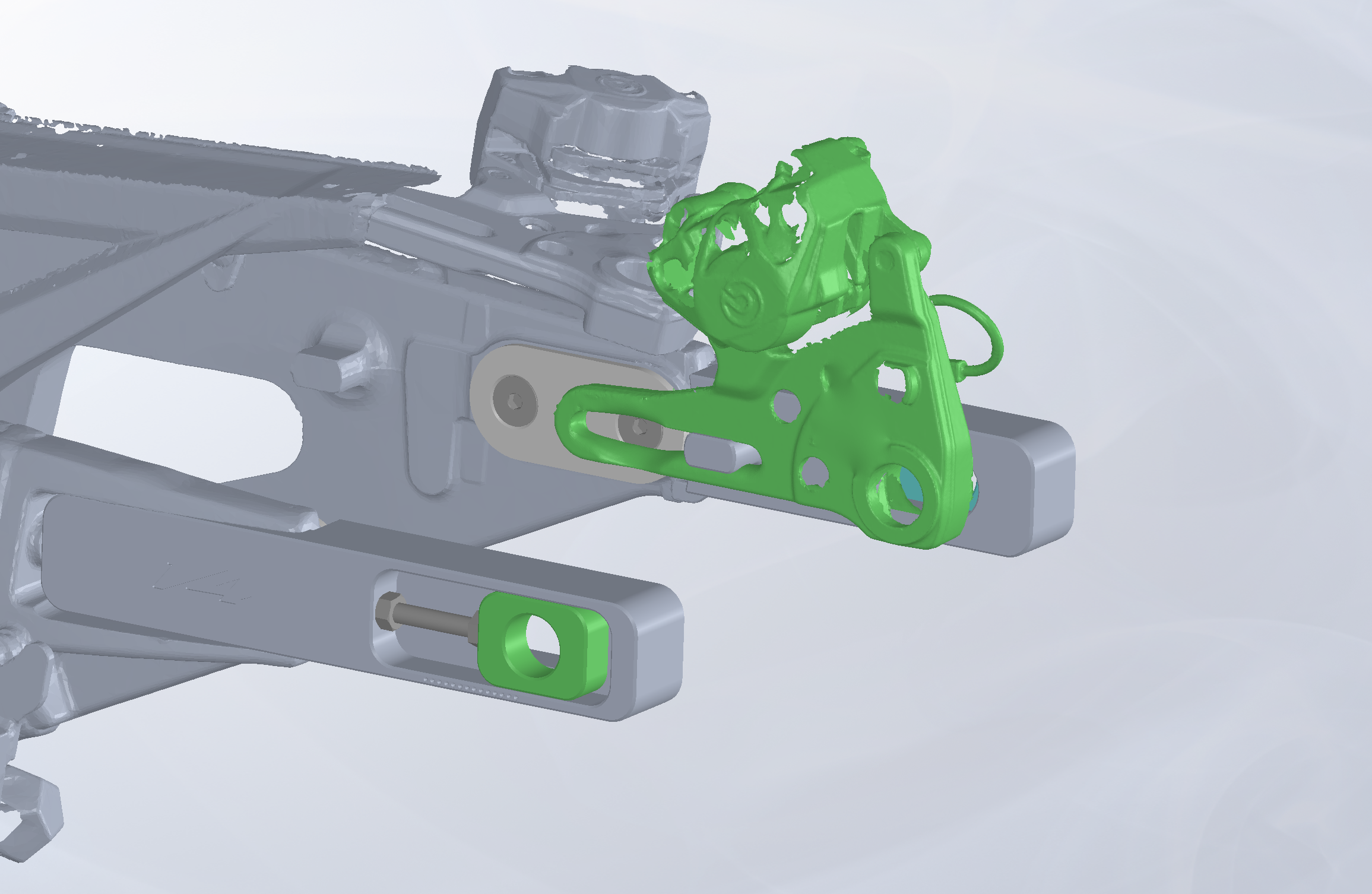
Laser Scan Session
Aprilia swingarm scanned with HandyScan Black Elite. Axle geometry, hat mounting faces, caliper bracket, and casting profile captured at ±0.025mm.
Initial Design Presented
Parametric SolidWorks assembly shared with Brandon and Sam. Geometry approved. "V4" (not RSV4 — Tuono variant) confirmed for engraving. Prototypes approved immediately.
First Prototypes Off Printer
FDM prototypes completed and dispatched same day. Shipped to Sam for fitment check.
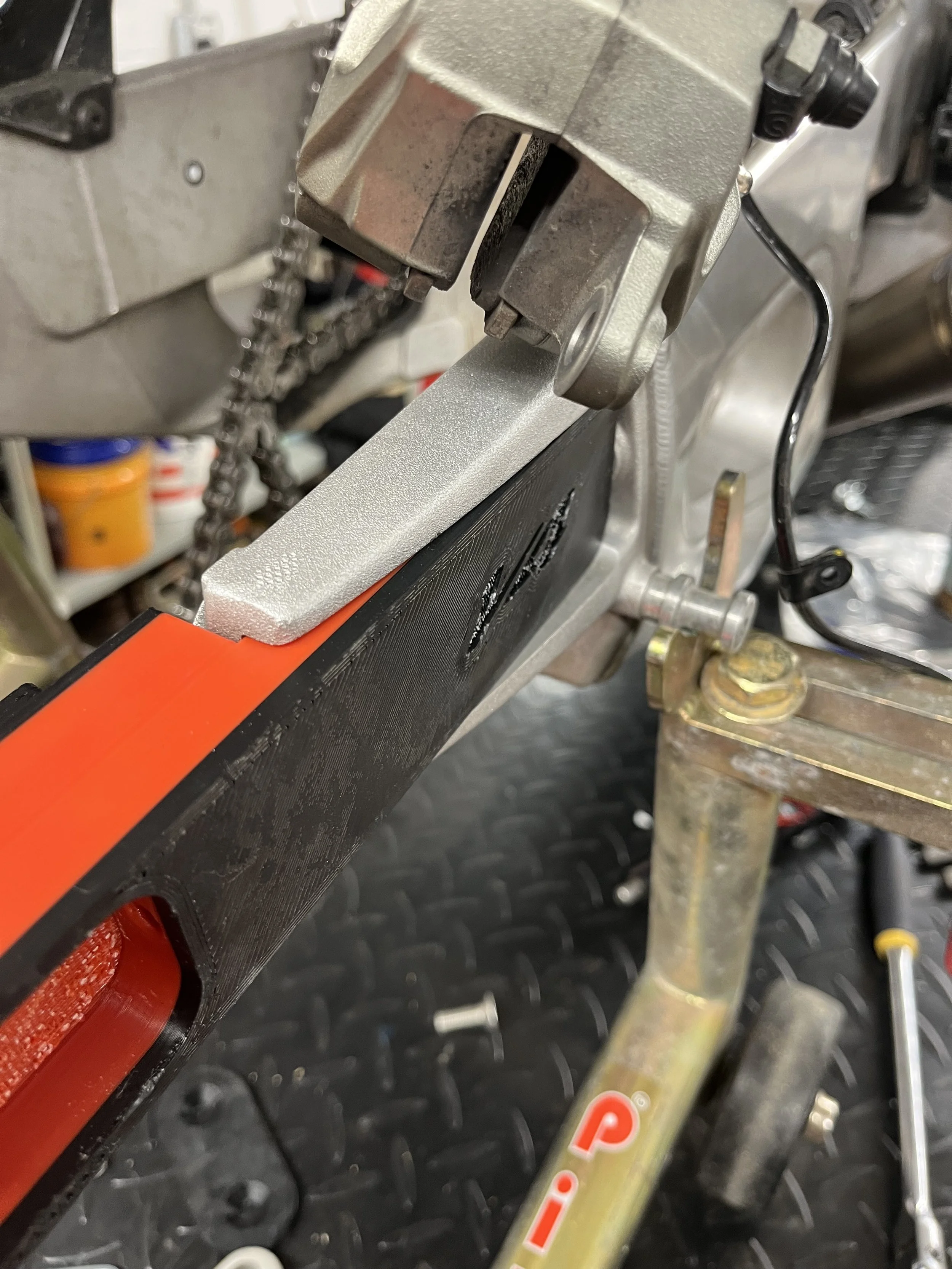
Design Review — Iterations
Review call with Brandon and Sam. Axle slider diameter adjusted to 25.05mm. Brake stub corrected. Hat flange reduced from 5mm to 4mm to clear caliper. New prototypes printed overnight.
Asymmetry Discovered & Resolved
Sam reports passenger-side interference. Photos confirm 4mm asymmetry in swingarm casting. Extension geometry corrected. V3 prototype dispatched.
Final Drawings Released
Production drawings completed and reviewed. Final design confirmed. Payment processed. Files sent to One Ten Machining for CNC production.
Parts Installed
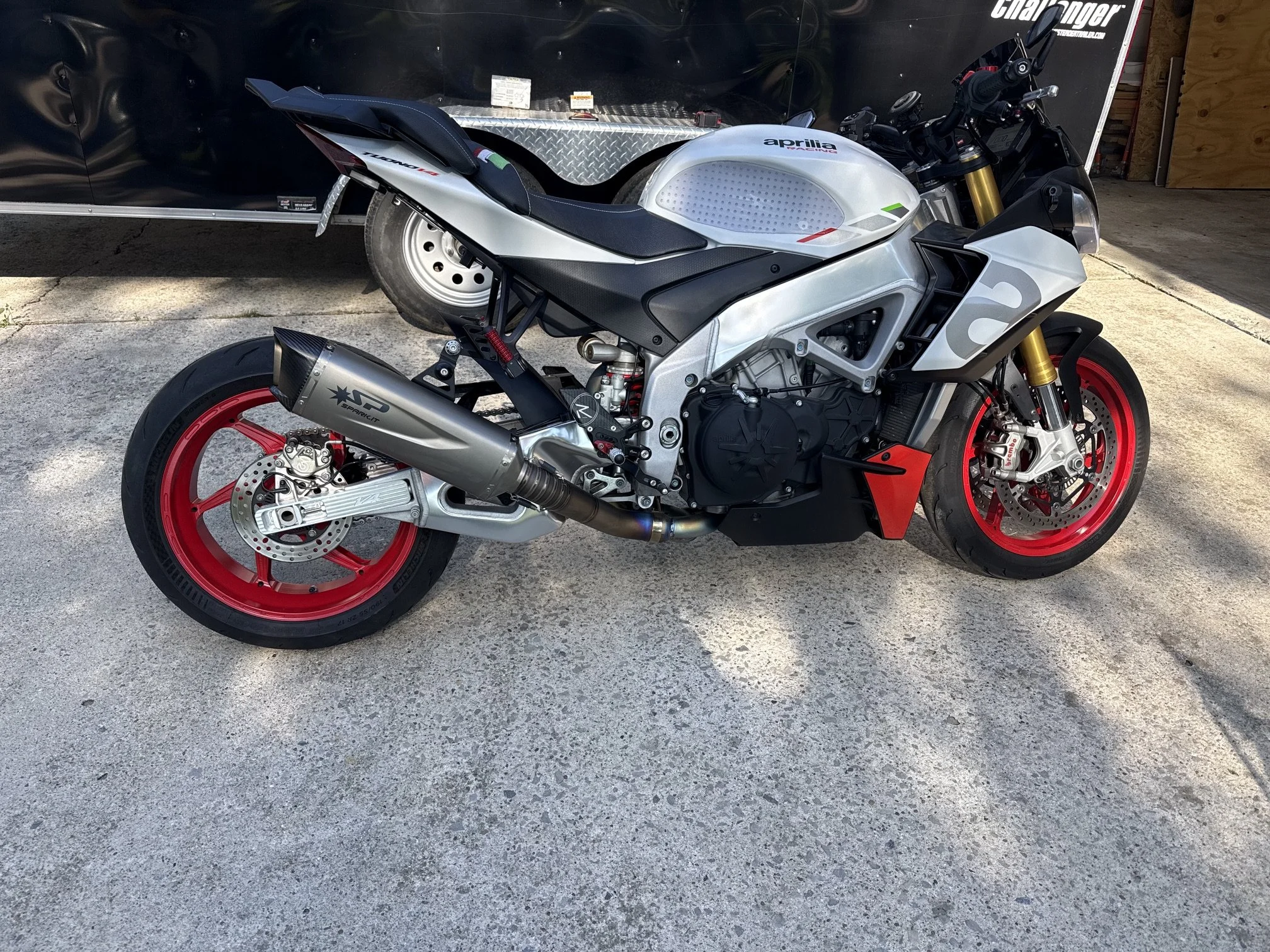
Machined aluminum extensions and axle sliders installed on the Tuono V4. Client feedback: "It all turned out amazing."
Ryan it all turned out amazing! Thanks again.
Brandon C. — Client
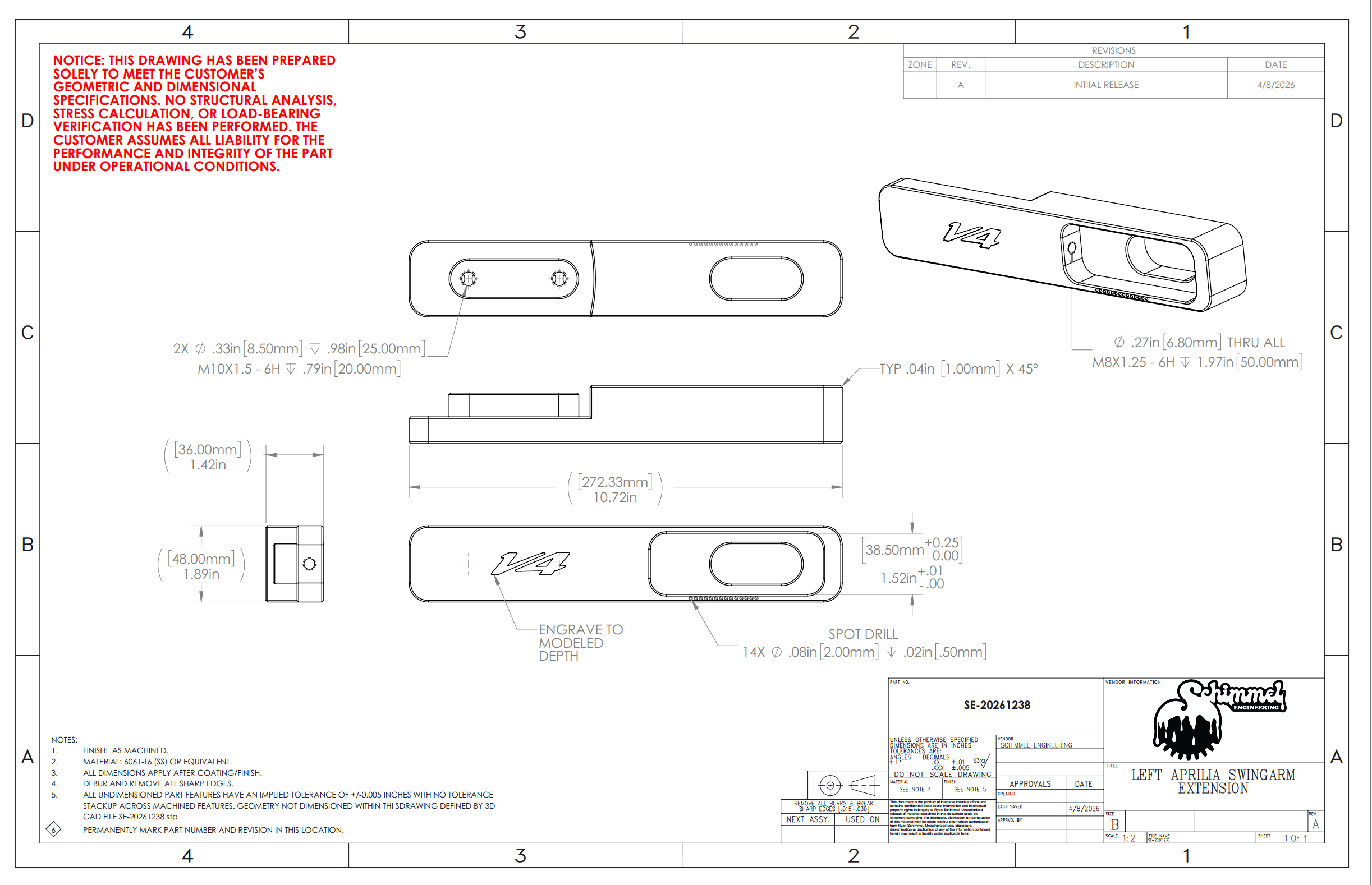
GD&T manufacturing drawing — dimensioned for CNC machining at One Ten Machining
What This Project Demonstrates
Scan-to-CNC With No Starting Point
This project had none of the usual inputs — no drawings, no CAD files, no OEM data. Laser scanning converted the physical swingarm into actionable geometry, parametric modeling built a production-ready assembly around it, and prototype-first validation caught the 4mm casting asymmetry before any metal was cut. The parts were machined by One Ten Machining and fit on the first attempt.
If you have a vintage, custom, or one-off motorcycle component with no drawings — we can scan it, model it, and get it into production. Mail-in scanning starts at $195. Mechanism design and drawings are quoted per project.
Have a Part With No Drawing?
We reverse engineer worn, custom, and discontinued components — and take them all the way to production-ready CNC drawings. No drawings required.