Plant Managers, Maintenance Engineers & Process Equipment Teams

Industrial 3D Scanning for Plant Managers & Engineers | Worn Parts, Process Equipment & Tooling | Schimmel Engineering

For Plant Managers, Maintenance Engineers & Process Equipment Teams

The part is worn, damaged, or out of production. The OEM is gone or doesn't support it. The drawings never existed, were lost, or don't reflect 20 years of field modifications. If production depends on a component you can't source — and you need exact geometry to have it reproduced — that's the problem we solve.

We come to your facility. Carry-in cases, battery-powered, no shutdown required. Our process isn't just scanning the damage — on worn or corroded components, we perform interpretative geometry reconstruction, mathematically rebuilding the original nominal profile so your manufacturer receives factory-new specification, not a copy of the wear. Deliverables typically within 5 business days.

Extrusion Screw & Barrel — Worn or Damaged, Geometry Reconstruction
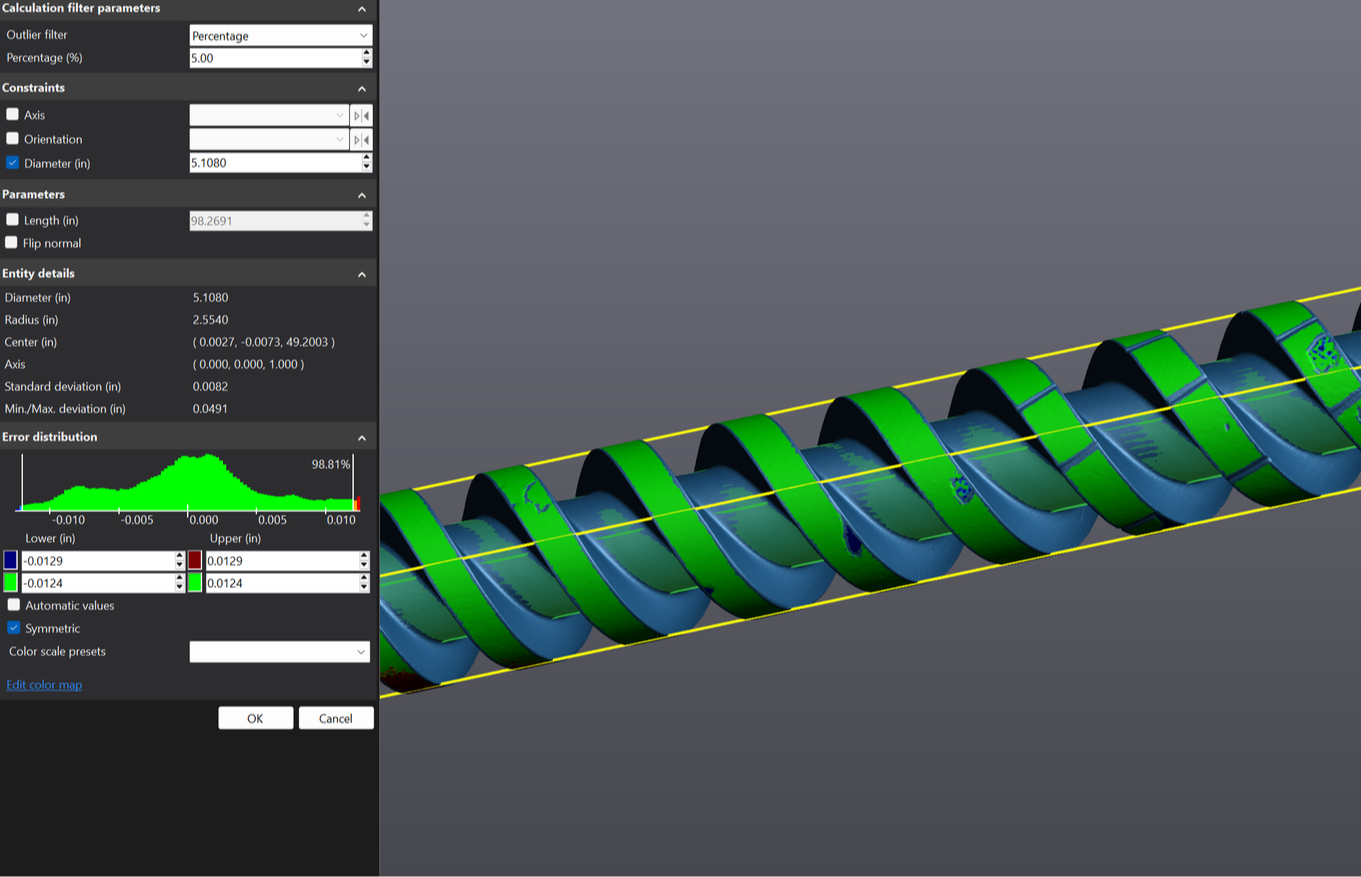
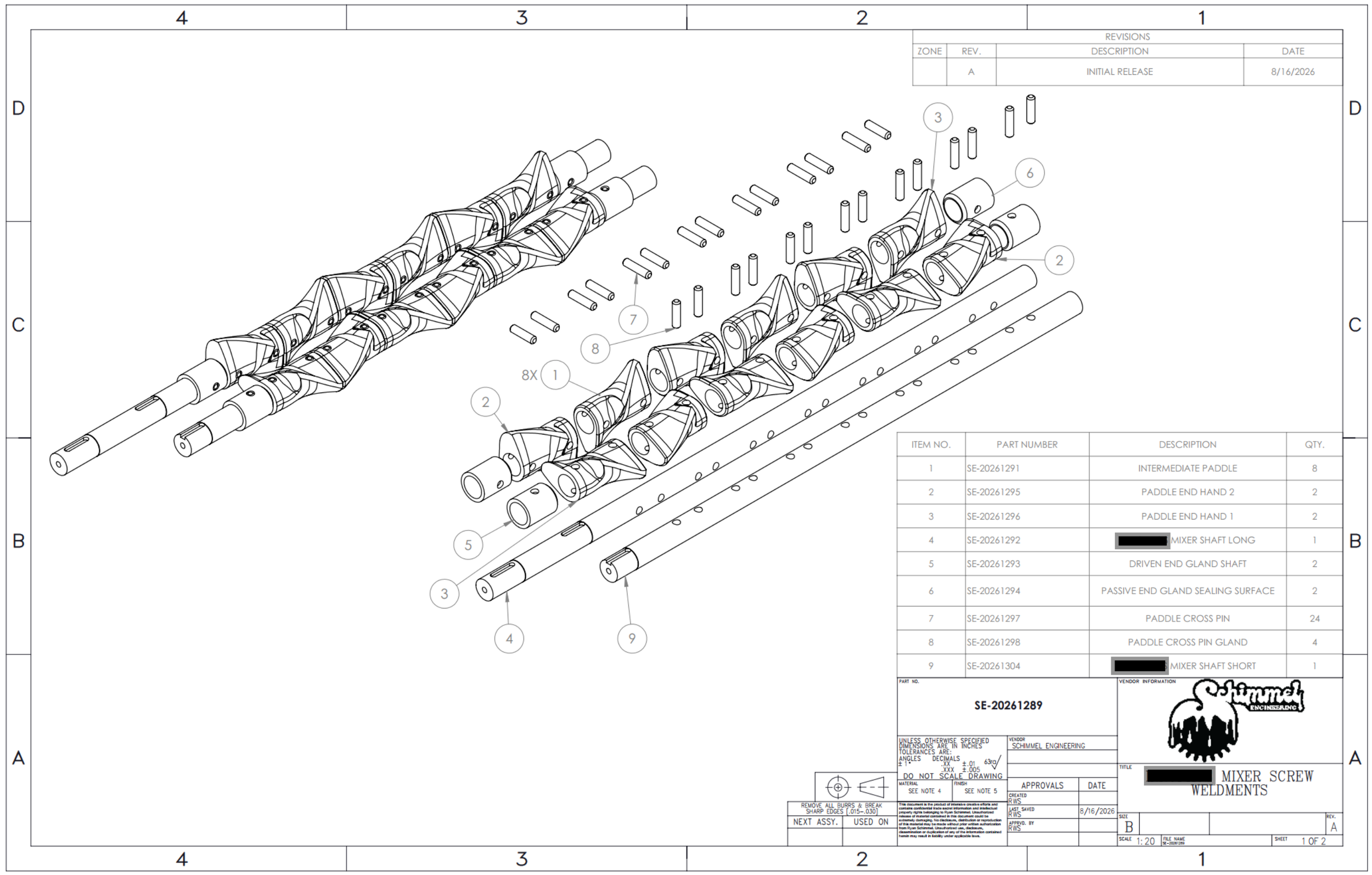
Twin and single extrusion screws up to 2.5m in length, barrels, and adapter endpieces. When a screw is worn, corroded, or damaged, a standard scan replicates the failure. We perform interpretative geometry reconstruction — analyzing the worn surfaces to identify the original nominal profile, rebuilding flight geometry, helix angle, compression ratio, and tip geometry to factory-new specification. Deliverable is a STEP or IGES solid model ready for an overseas or domestic screw manufacturer. Common in plastic compounding, rubber processing, and food extrusion.
From $2,800
Est. — contact for quote

Mandrel Reverse Engineering — Convolute & Spiral Winder

Tube-forming mandrels for convolute winders, spiral winders, and core-forming equipment scanned for reproduction and derivation of new sizes. If a customer requires a new tube diameter not currently in your mandrel inventory, we scan an existing mandrel, extract the taper geometry, and derive the new-size model from the same profile family. Mandrel manufacturer receives a complete STEP model. Common in paper tube, composite tube, and packaging core manufacturing.
From $650
Est. per piece

Process Equipment Component — As-Built Scan, No Drawings Required

Pump housings, compressor casings, gearbox bodies, valve bodies, heat exchanger heads, and custom fabricated process components where OEM drawings are unavailable or the part has been field-modified beyond what any drawing reflects. We scan what exists and produce the geometry the replacement shop needs — whether that's a new casting, a machined replacement, or a fabricated reproduction.
From $1,400
Est. — contact for quote

Production Tooling & Die — As-Built Scan & Wear Analysis

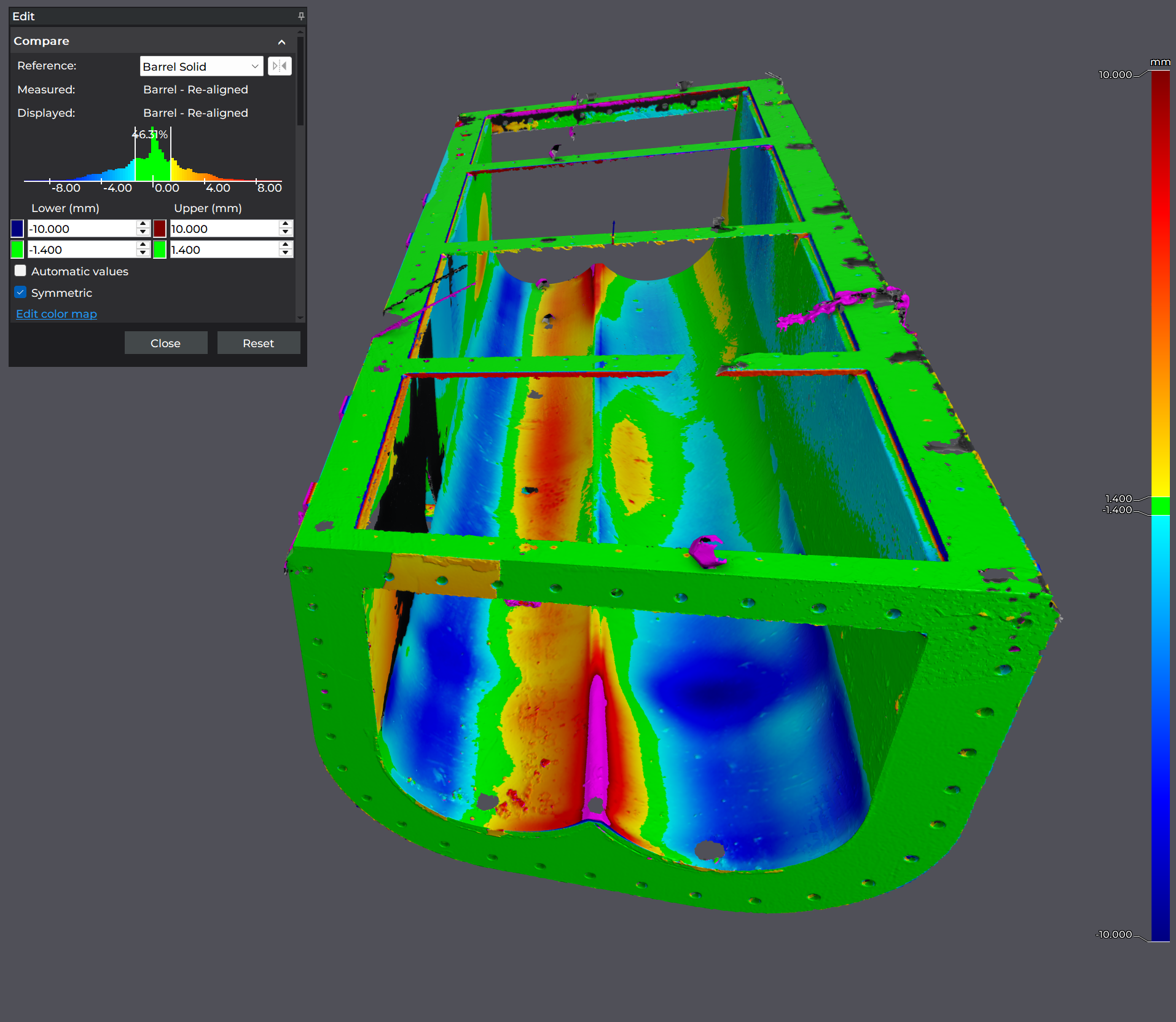
Dies, molds, forming tools, stamping tooling, and production fixtures scanned for wear analysis and reproduction documentation. Deviation mapped against nominal CAD or drawing to identify where material has been lost, where dimensions have drifted, and whether the tool is still within acceptable limits. Used to time maintenance intervals and document tooling condition before a rebuild or replacement is ordered.
From $1,200
Est. — contact for quote

Machine Envelope Scan — CNC, Press, Extruder, Compactor

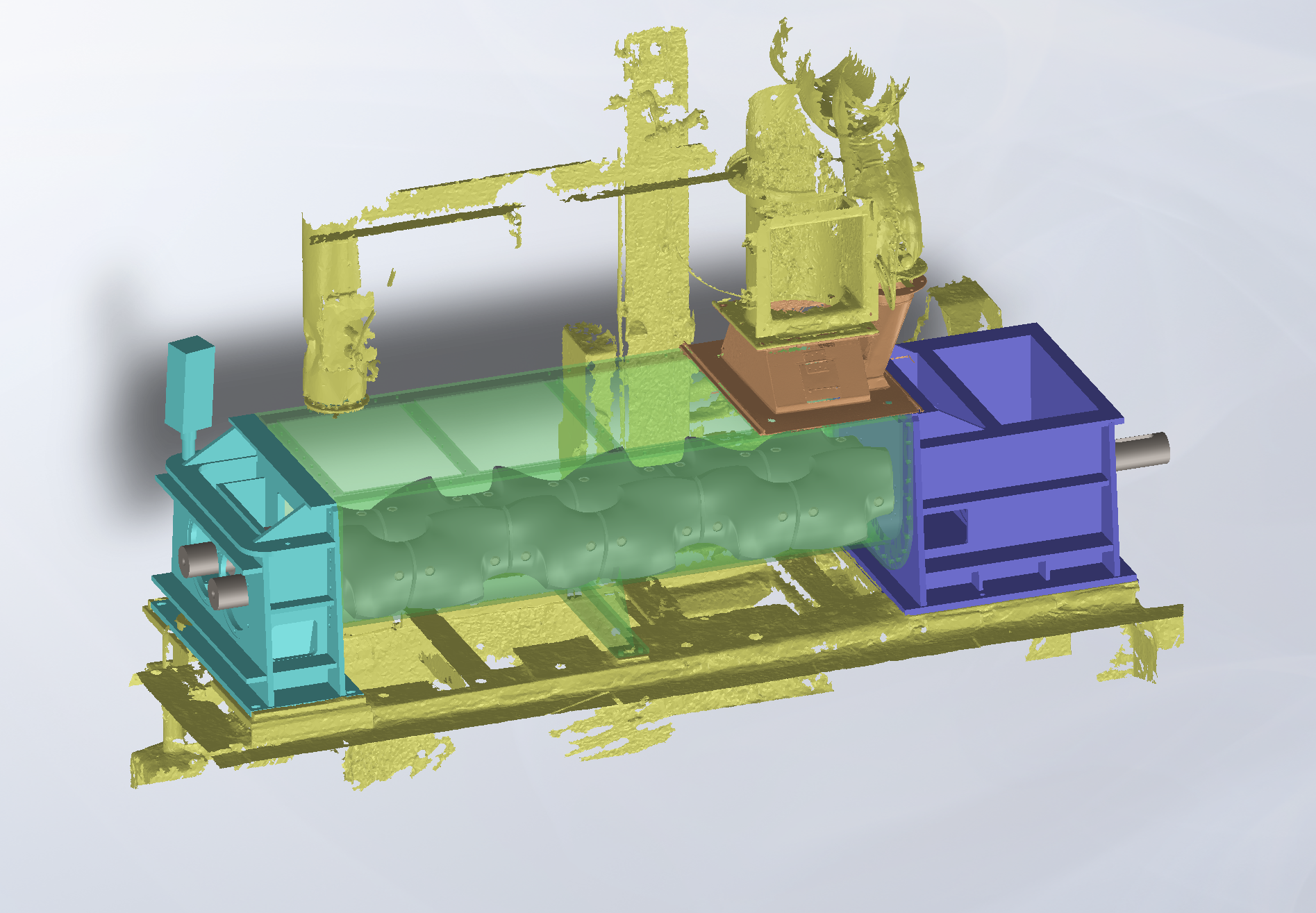
Full machine exterior envelope for facility layout, guarding design, automation integration, and as-built documentation. CNC machining centers, hydraulic presses, extruders, compactors, and production line equipment. Used when facility drawings don't reflect the actual machine footprint, or when new guarding, conveyors, or robot integrations have to be designed around the real machine geometry.
From $2,000
Est. — contact for quote

First Article Inspection — Incoming Vendor Part
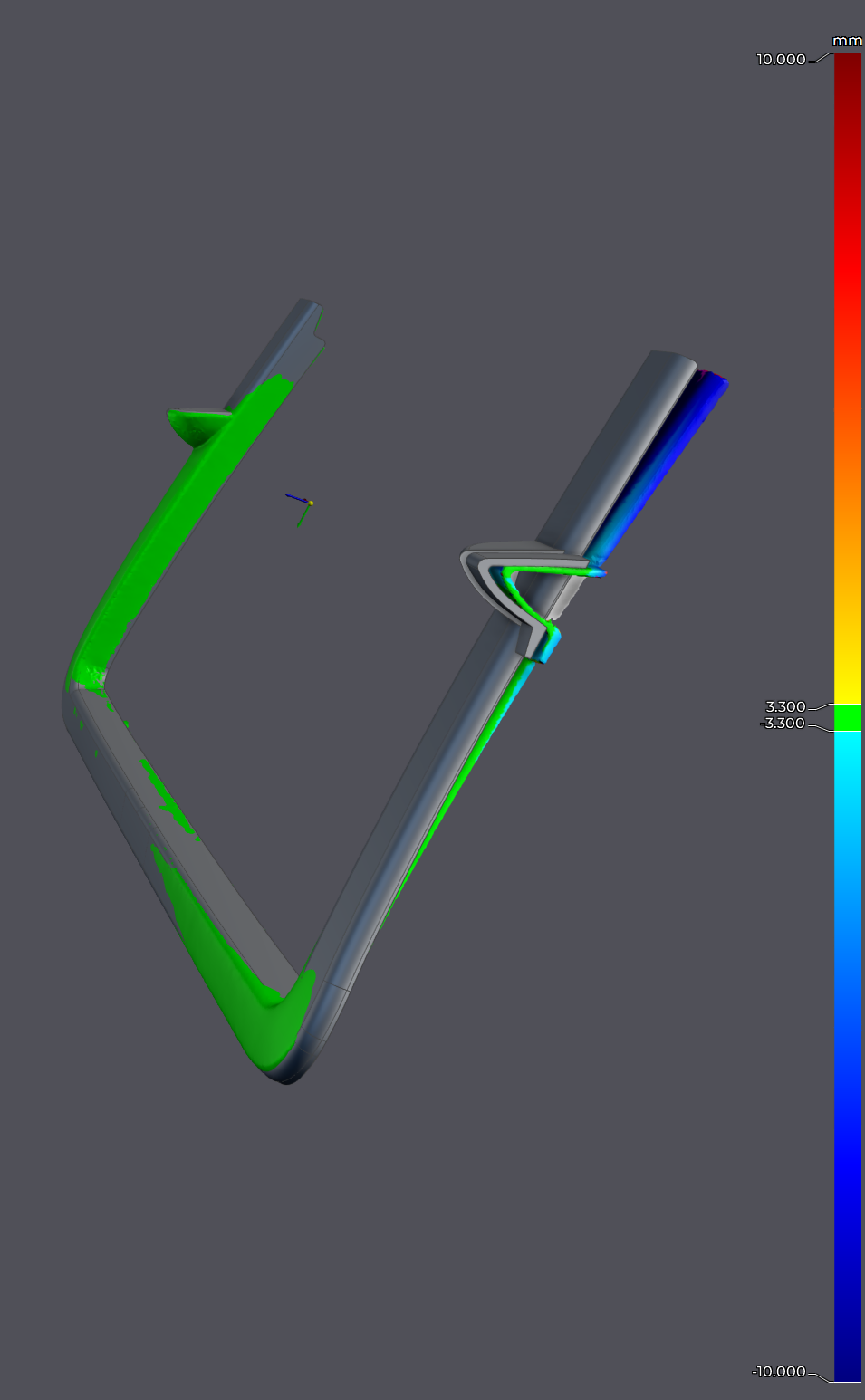
Dimensional verification of incoming machined, cast, or fabricated components against your engineering drawing or nominal CAD model. Deviation map with GD&T callouts delivered as a PDF report. Used to verify vendor output before acceptance, identify systemic vendor process problems before they reach your production line, and document non-conformances for supplier corrective action.
From $950
Est. per part

Weldment As-Built Inspection

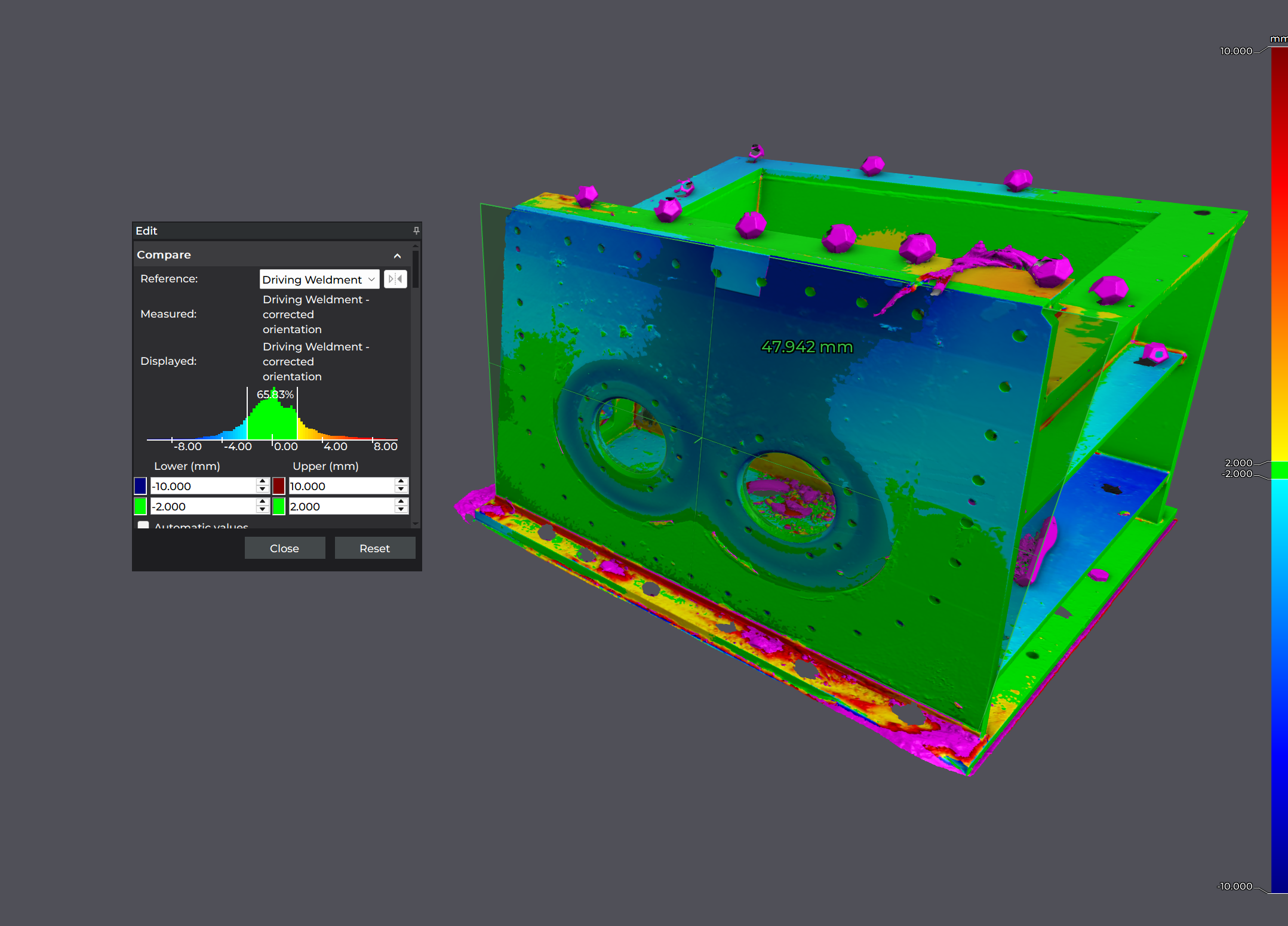
Fabricated weldments verified against nominal drawing or CAD before acceptance — frames, skids, pressure vessel supports, lifting attachments, and structural fabrications. Identifies weld distortion, missed tolerances, and required rework before the part ships or is installed. Particularly useful when a fabricated assembly has to fit precisely with mating structures or when dimensional compliance is required for certification.
From $1,100
Est. — contact for quote

On-Site Visit — Mobilization Fees

All base prices include travel within 50 miles of Nashville (37206). We come to your facility. No shore power required, no production shutdown needed, Class 1 eye-safe lasers. All pricing is estimated — contact us with your component type and facility location for a project-specific quote.

Within 50 miles of Nashville 37206Included
51–150 miles+$180
151–300 miles+$295
300+ miles / Multi-dayQuoted individually
National travelContact for quote

When Plant Teams Call Us

Scenario — Plastic compounding, Hohenwald TN
Twin compounding screws worn beyond serviceable limits. OEM screw manufacturer needs geometry to reproduce.
Two 2.5-meter intertwined plastic compounding screws — worn, flight geometry degraded, no usable drawings. The overseas screw manufacturer needs a STEP model to produce replacements, not a scan of the damage. We performed interpretative geometry reconstruction: identified the original flight profile, helix angle, compression ratio, and tip geometry from the surviving geometry, and delivered factory-new specification. Maintenance coordinator and plant manager received a "do not exceed" scope with budget certainty before we arrived.
Scenario — Paper tube manufacturing
Customer requires a new tube diameter. No mandrel in inventory. Manufacturer needs geometry derived from existing profile family.
A tube manufacturing plant needed new mandrel sizes for a Paco convolute winder to satisfy a customer requiring a new core diameter. No tooling drawings existed for the existing mandrels. We scanned the current inventory, extracted the taper geometry and profile family, and derived the new-size model so the mandrel manufacturer could produce the new tooling to the same specification as the existing set.
Scenario — Process equipment, no drawings
A pump housing has been field-modified three times. The OEM drawing no longer reflects what's installed.
Field modifications accumulate over decades. Bosses are added, ports are relocated, flanges are changed. When the housing eventually needs to be replaced, no drawing reflects the current configuration. We scan the installed housing and produce a complete as-built record — every flange face, every port location, every mounting boss — so the replacement can be manufactured to match what's actually in the plant, not a drawing from 1987.
Scenario — EV / advanced manufacturing
A quality engineer needs custom tooling to hold components in a CT scanner. No standard jig exists.
A battery cell quality team needed a custom sample-holding jig for CT scanner inspection of production parts. No standard tooling fit their specific cell geometry. We scanned the components requiring inspection, built a parametric model in SolidWorks, and delivered a complete jig design ready for rapid prototyping and production. The quality team received a functioning fixture in days rather than the weeks a traditional tooling process would require.
Scenario — Production tooling wear
The die has been in production for three years. Nobody knows if it's still within spec.
Tooling wears gradually and production teams rarely know how much until something goes wrong. We scan the die, deviation-map it against the nominal CAD, and produce a report showing exactly where material has been lost, which dimensions have drifted outside tolerance, and whether the tool needs immediate replacement or can run for another production cycle. Maintenance can plan around data rather than guesswork.
Scenario — Incoming vendor inspection
The machined casting arrived and something doesn't look right. Need dimensional verification before it goes to assembly.
A machined casting arrives from a vendor and the assembly team flags a fitment problem. Rather than guessing at the cause, we scan the part against the engineering drawing — deviation map identifies exactly which features are out of tolerance, by how much, and in which direction. The vendor receives objective data for corrective action. The plant avoids an expensive downstream assembly failure.

Questions from Plant Engineers & Managers

Our extrusion screw is worn. Can you give our manufacturer something better than a scan of the damage?
Yes. Scanning the wear and handing that to a manufacturer produces a worn part — not what you need. Our process on worn components is interpretative geometry reconstruction. We analyze the surviving geometry to identify the original nominal profile — flight depth, helix angle, compression ratio, clearance geometry — and mathematically rebuild it to factory-new specification. The manufacturer receives a STEP or IGES model representing what the screw should look like, not what it looks like after years of service.
We need a new mandrel size derived from an existing one. Can you do that?
Yes. We scan the existing mandrel, extract the taper geometry, profile family, and surface specification, and derive the new-size model using the same geometric relationships. The mandrel manufacturer receives a complete STEP model for the new size, produced from the same design intent as your existing tooling. Common for convolute winders, spiral winders, and tube-forming equipment where customer requirements drive new core diameters.
Can you work in our facility without shutting down the line?
Yes in most cases. Our equipment is battery-powered, Class 1 eye-safe, and fits in carry-in cases. We don't need shore power or special safety precautions. If the component to be scanned is in production, we schedule around your maintenance window or planned downtime. If it's a removed component — staged for repair or replacement — we can scan it wherever it's accessible, including on the floor next to the line.
What format do you deliver for overseas manufacturers?
STEP (.stp) and IGES (.igs) solid models, which are universally compatible with CAM platforms used by CNC and casting manufacturers globally. For inspection work, we also deliver PDF deviation map reports with GD&T callouts against your drawing. If your manufacturer uses a specific platform or has format requirements, let us know during scope review.
Can you scan a component that's still installed in the machine?
It depends on access. A screw inside a barrel needs to be pulled for full surface capture. A pump housing, gearbox casing, or machine envelope can typically be scanned installed. During scope review, we'll discuss what needs to come off the machine and what can stay in place, and plan the scan accordingly to minimize your downtime.
How does your first article inspection compare to CMM?
A CMM probes discrete points on a surface. Our scanning captures millions of points across the full surface in a single pass — providing a complete deviation map rather than a sampled set of measurements. For castings, weldments, and complex surfaces with organic geometry, scanning captures information a CMM can miss. For tight-tolerance machined features with GD&T callouts, both methods are valid — we can discuss which is appropriate for your specific component and tolerance requirements.

Ready to discuss your component?

Tell us what the part is, what condition it's in, and what you need geometry for. We'll respond within one business day.

Previous
Previous

Millwrights, Overhaul Teams & Maintenance Metrologists

Next
Next

A&P Mechanics, MRO Shops & EAA Builders