For A&P Mechanics, MRO Shops & EAA Builders
Schimmel Engineering captures the physical world with NIST-traceable metrology. From a discontinued machine part to a full-size aircraft, we scan it, model it, and deliver engineering-class geometry — not LiDAR, not consumer-grade. Precision instruments operated by a licensed Professional Engineer.
We scan at the aircraft. Carry-in cases, battery-powered, operational in 20 minutes. Preferred local ramps: BNA (Nashville International), less than 10 miles from our office, and Music City Executive (KXNX), Gallatin, TN. We travel nationally. Deliverables typically within 5 business days.
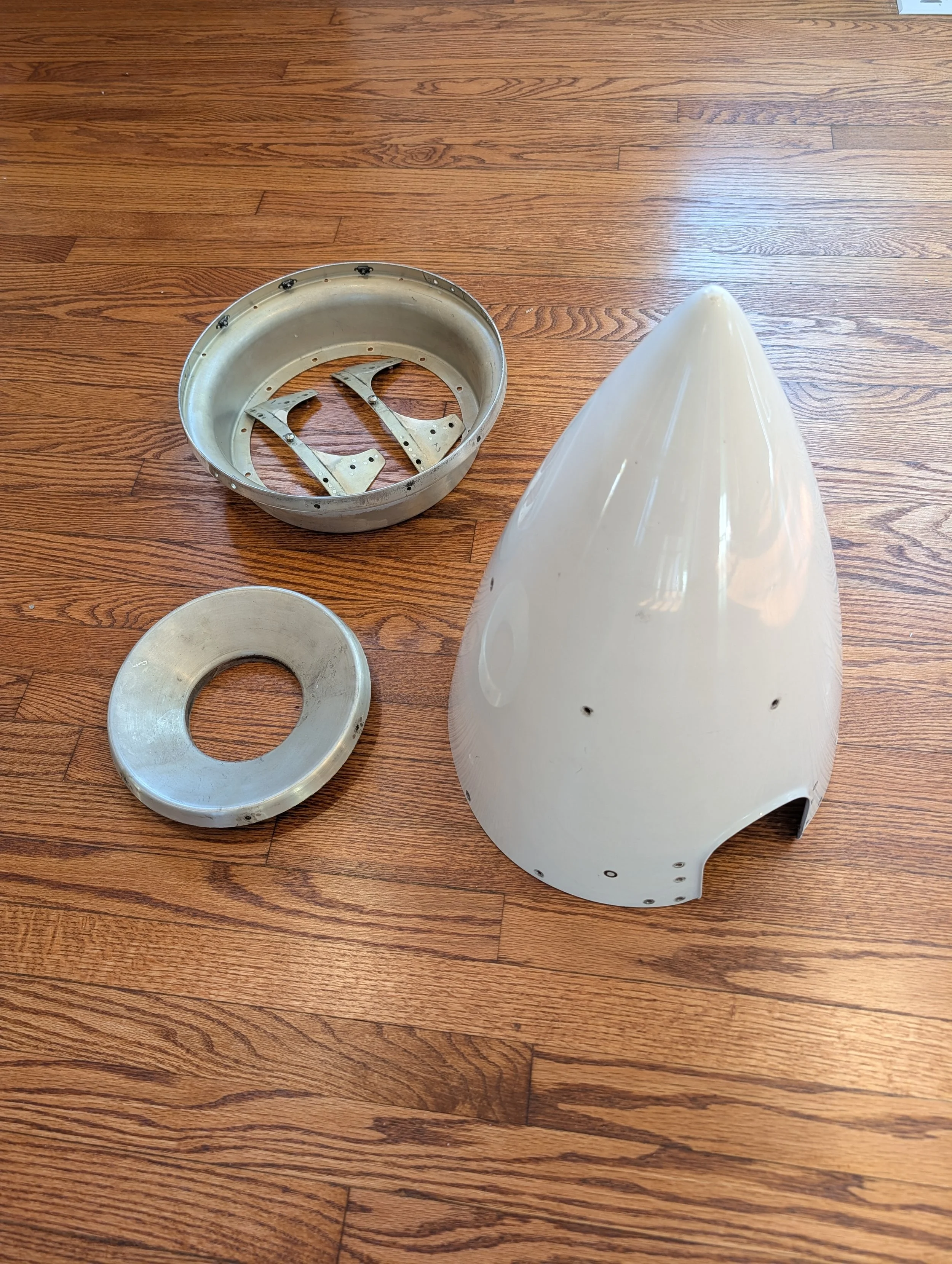
The Part
An aluminum GA aircraft spinner, as received.
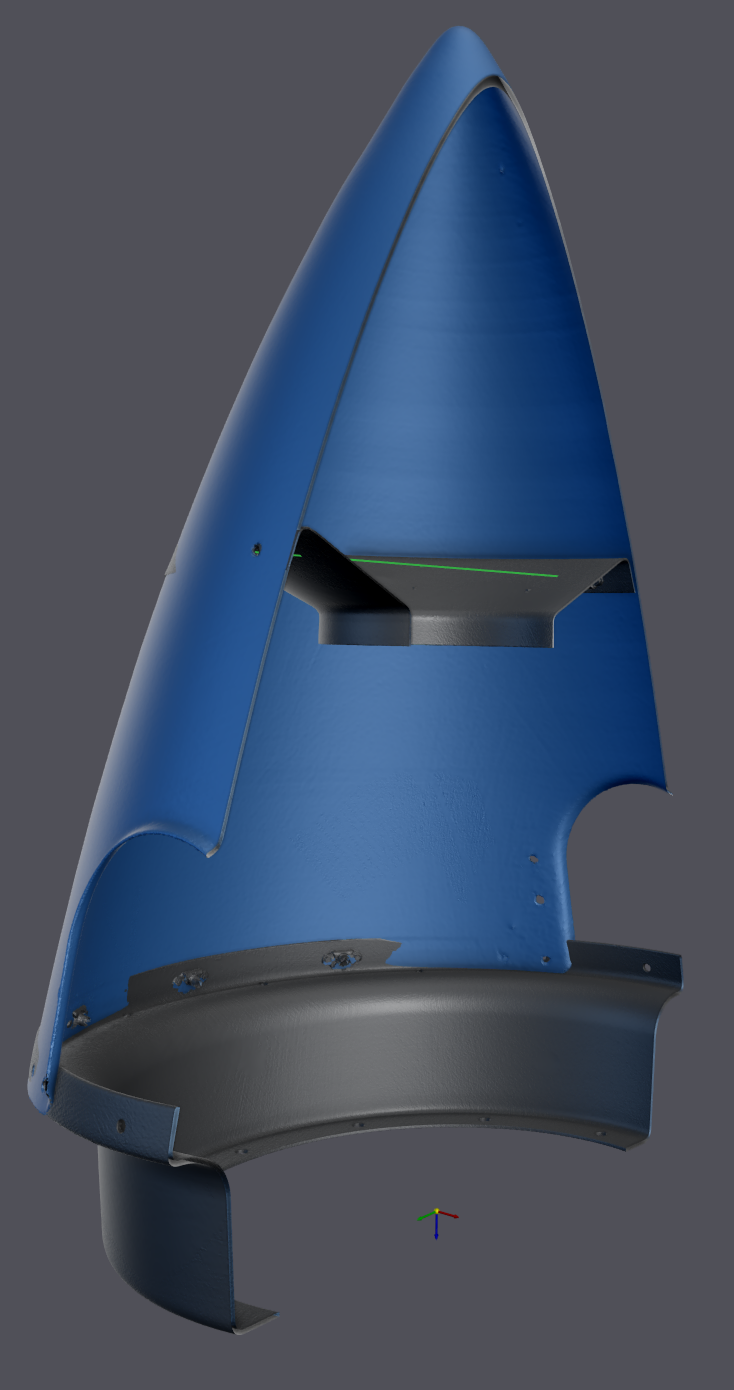
The Scan
Oriented, mated, and cleaned scan data with a cross-section cut.
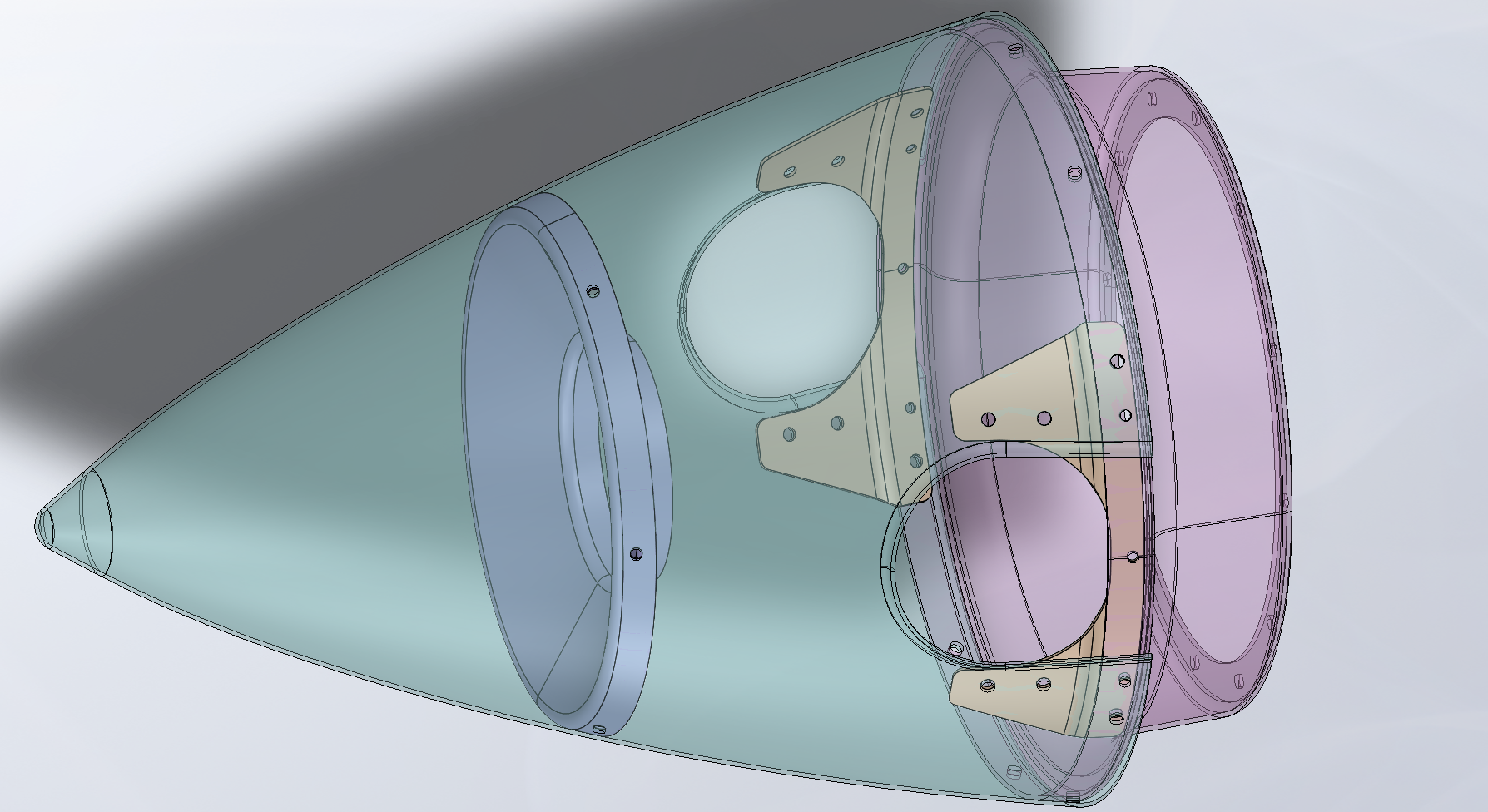
The Model
The reverse-engineered, fully parametric solid model.
Questions from A&P Mechanics
The original cowling is cracked and I need to have a new one made. Can a fabricator work from your scan data?
Yes. We deliver an OBJ or STL mesh file that fiberglass layup shops, composite fabricators, and CNC sheet metal shops can work from directly. If your fabricator uses specific CAD software (SolidWorks, CATIA, Rhino, etc.) we can provide a parametric model as an add-on. Most composite shops prefer the mesh for tooling — they don't need parametric features, they need surface geometry they can project onto tooling foam or a plug.
Can your scan data be used to support a Form 337 or DER package?
We can give your DER accurate geometry — what the surface or structure actually looks like, in millimeters. Whether that data meets the evidentiary requirements for a specific approval is a question for your DER or FSDO, not us.
Do you need the aircraft to be airworthy or can you scan it in maintenance status?
Maintenance status is fine. We typically prefer panels on and cowlings closed for exterior captures so you get the as-installed geometry, but we can scan with panels removed if that's the purpose — for example, capturing the mating firewall ring to design a replacement cowl. The aircraft does not need to move, run, or be in airworthy condition.
How do you get access to the aircraft? Do you need hangar space?
Our equipment fits in carry-on Pelican cases and runs from internal battery — no shore power, no spray. Preferred local ramps: BNA (Nashville International), less than 10 miles from our office, and Music City Executive (KXNX) in Gallatin, TN. We can work at your home base anywhere in the country. Hangar or covered ramp access is typically required, but we work around your maintenance schedule.
A prop blade was repaired after a tip strike. Can you verify it's within limits?
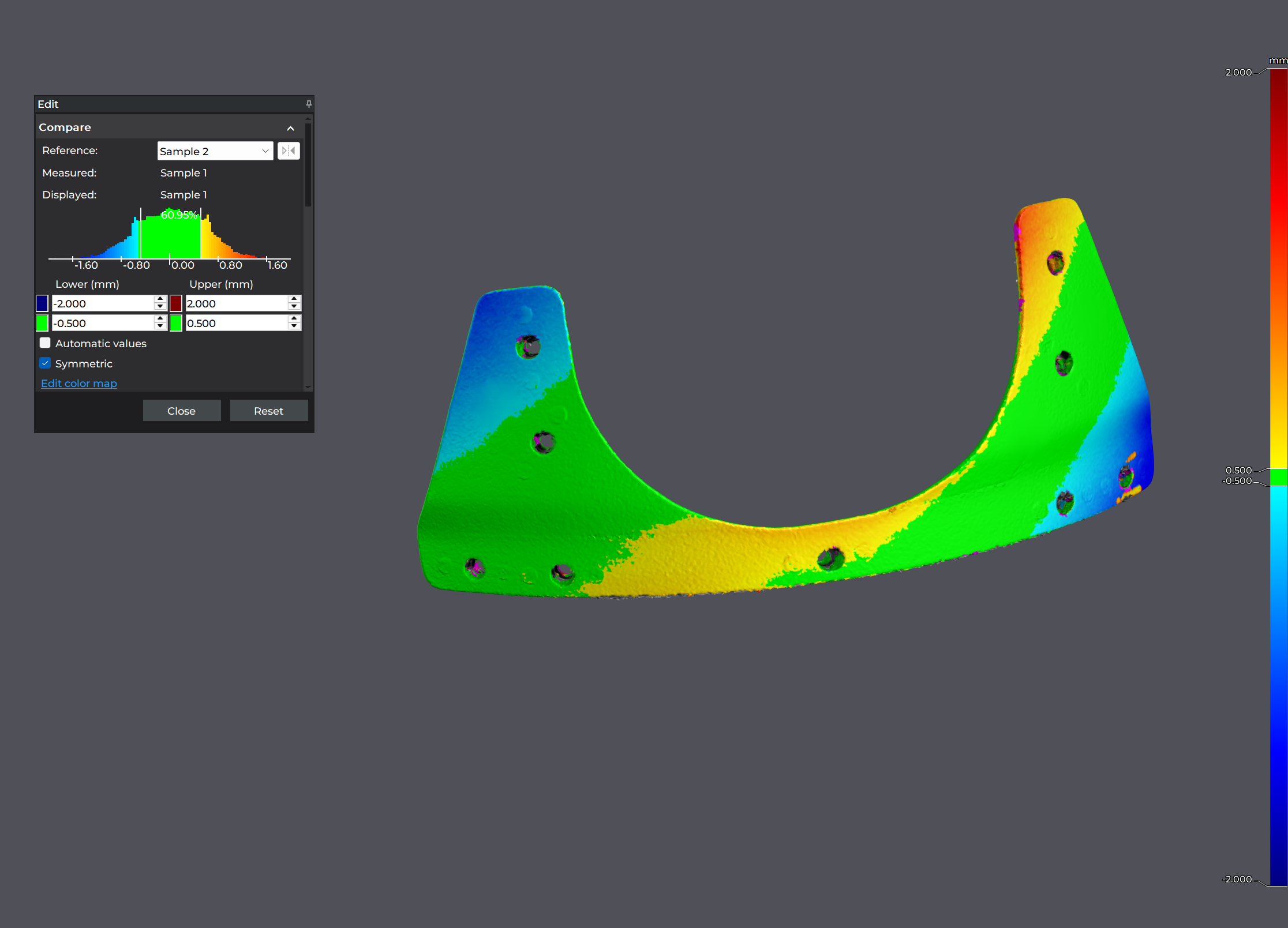
We can scan the repaired blade and compare it to a known-good reference blade or a nominal airfoil profile. The result is a deviation map showing where the repaired blade is within the manufacturer's dimensional limits and where it's out. This gives you objective data to make an airworthiness determination, rather than relying on visual inspection alone. Scan is per blade.
What types of work are a good fit for your process?
Any situation where you need exact geometry of a surface, structure, or component and don't have usable drawings. Replacement panel or fairing fabrication when the OEM mold is gone — wheel pants, intersection fairings, belly pans, windshield frames. Fairing design that has to fit the actual fuselage contour, not a nominal model. Propeller blade profile verification after a tip repair. As-built documentation of a modification before the next shop touches it. EAA homebuilt documentation before the DAR visit. If the core problem is "I need to know what this actually looks like in three dimensions," that's our work.
How long does it take and what does it cost?
A single-engine GA aircraft exterior takes 3 to 6 hours on-site including setup. A Robinson R22 or R44 takes 4 to 6 hours. Individual panels, fairings, and access panels take 30 to 90 minutes. Prices start at $650 for a single panel or fairing, $1,800 for a light sport or ultralight, $2,800 for a single-engine piston, and $3,200 for a light utility helicopter. All prices include travel within 50 miles of Nashville (37206).
What file format do you deliver, and can a fabricator work from it directly?
We deliver a full-resolution mesh in OBJ or STL format. Fiberglass layup shops, composite fabricators, and CNC sheet metal shops can work from these directly — most don't need parametric CAD, they need surface geometry they can project onto tooling foam or a plug. If your fabricator needs a SolidWorks model, that's available as a quoted add-on.