

Lockeland Springs Column Capitals
Historic Preservation · Nashville · National Register · Additive Manufacturing
Five Column Capitals.
One Century of Weathering.
Indistinguishable Results.
A National Register home in Nashville's Lockeland Springs Historic District was missing five ornamental porch column capitals. Schimmel Engineering scanned the seven surviving originals, engineered segmented reproductions that captured 110 years of weathering, and delivered five finished capitals at $1,000 each — all inclusive. The building contractor could not tell the new from the old at five feet.
The Problem
National Register Standards. No Replacement Available Off the Shelf.
The home sits within the Lockeland Springs Historic District — a Nashville neighborhood listed on the National Register of Historic Places. Five of the twelve ornamental porch column capitals were missing, damaged beyond repair by decades of Tennessee weather. Seven originals remained intact.
For a home subject to Historic Zoning Overlay requirements and National Register integrity standards, "close enough" is not acceptable. Any replacement that looks visibly newer than the century-old surviving originals compromises the character of the home and risks non-compliance with preservation guidelines.
The problem with traditional hand-carving or off-the-shelf profiles is precisely that they look new. They lack the softened edges, dimensional variation, and surface character that 110 years of Tennessee humidity, freeze-thaw cycles, and paint layers create. The challenge was not to reproduce the designer's original intent — it was to reproduce the aged result.
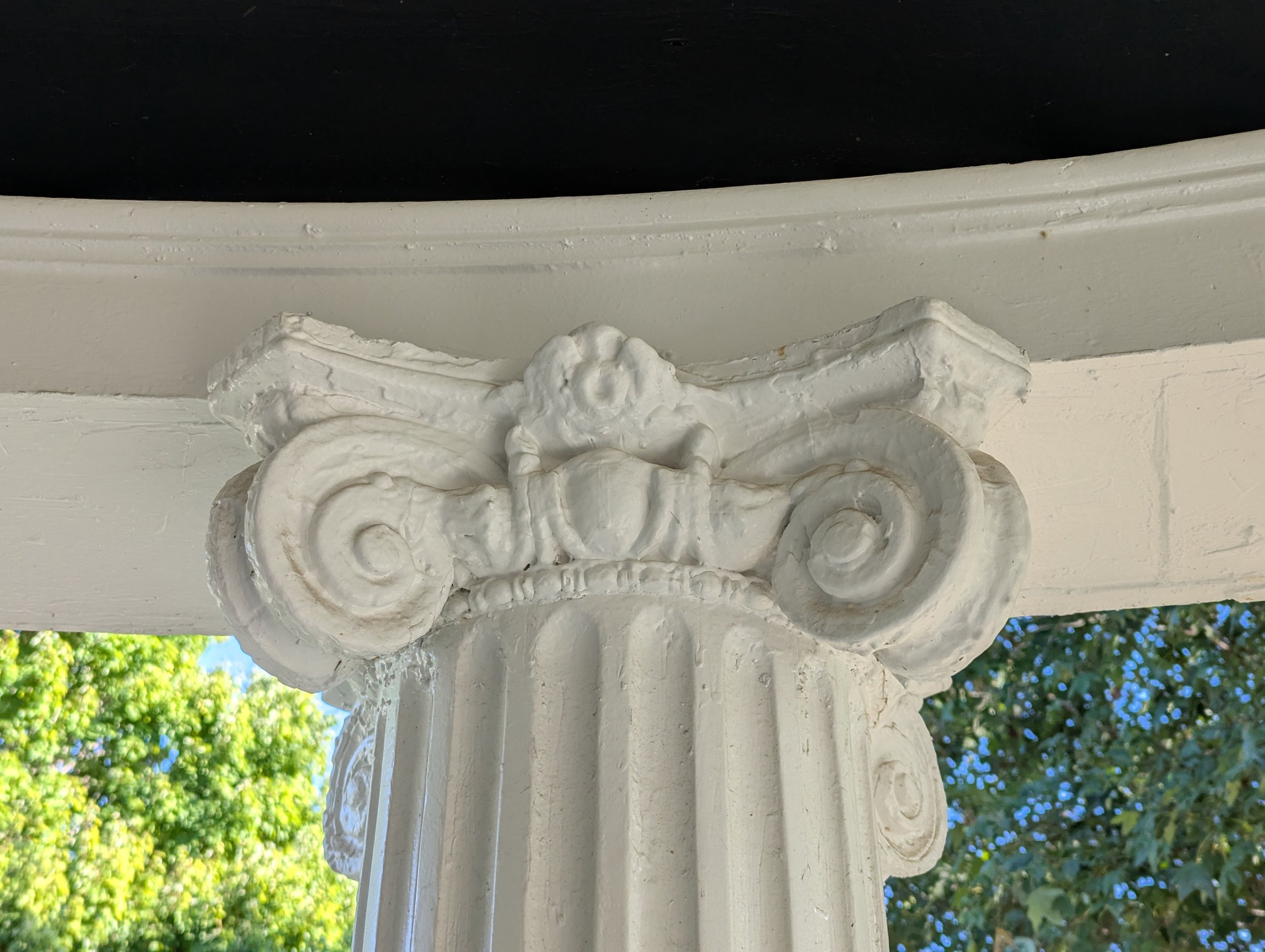
One of seven surviving original capitals — scanned as the reproduction master
The Workflow
Scan the Age. Engineer the Assembly. Print the History.
The key insight driving this project: don't fight the weathering — capture it. By scanning an original surviving capital at metrology grade, every crack, softened corner, paint layer ridge, and dimensional variation becomes part of the reproduction master. The replacements don't approximate the aged result. They are a clone of it.
One surviving original capital was scanned using the Creaform HandyScan Black Elite at ±0.025mm accuracy — capturing the complete geometry including weathered surface detail, softened edges, and the dimensional variation that defines the character of a century-old piece. The scan produced a high-density point cloud that no hand measurement or photograph could replicate.
In VXElements and VXModel, the scan data was cleaned — removing dust, debris, and incidental surface contamination while preserving intentional weathering geometry. The model was oriented to a true vertical axis and a Boolean subtraction performed to fit the capital precisely to the column shaft diameter of the existing posts.
Each capital was too large to print or install as a single piece. Using parametric design in SolidWorks, the model was segmented into four precision quadrants with engineered interlocking joints, internal alignment tabs, and recessed fastener points designed for field installation. The assembly was designed so the building contractor could install without modification.
Each quadrant was printed on a large-format FDM printer in ABS — selected for its dimensional stability in Nashville's heat and UV environment, its resistance to moisture, and its surface characteristics after post-processing. Each complete capital consumed approximately 4kg of material, producing a dense structural part with the mass and acoustic character of solid wood.
After printing, support structures were removed and all exterior surfaces media blasted. This eliminated layer lines, created a slightly porous surface texture consistent with aged painted timber, and provided mechanical tooth for primer adhesion. The result is a surface that paints and ages identically to the surrounding original woodwork.
Quadrants were delivered to the job site. The building contractor installed them using the engineered fastening system designed into the model — no field modification required. A final coat of historic-palette paint was applied to tie the new and original together. Install not included in the $1,000 per capital scope.
Standing five feet from the finished porch, the building contractor could not identify which capitals were original and which were reproductions. That was the standard we set at the start of the project. We met it.
Project Documentation
From Point Cloud to Porch
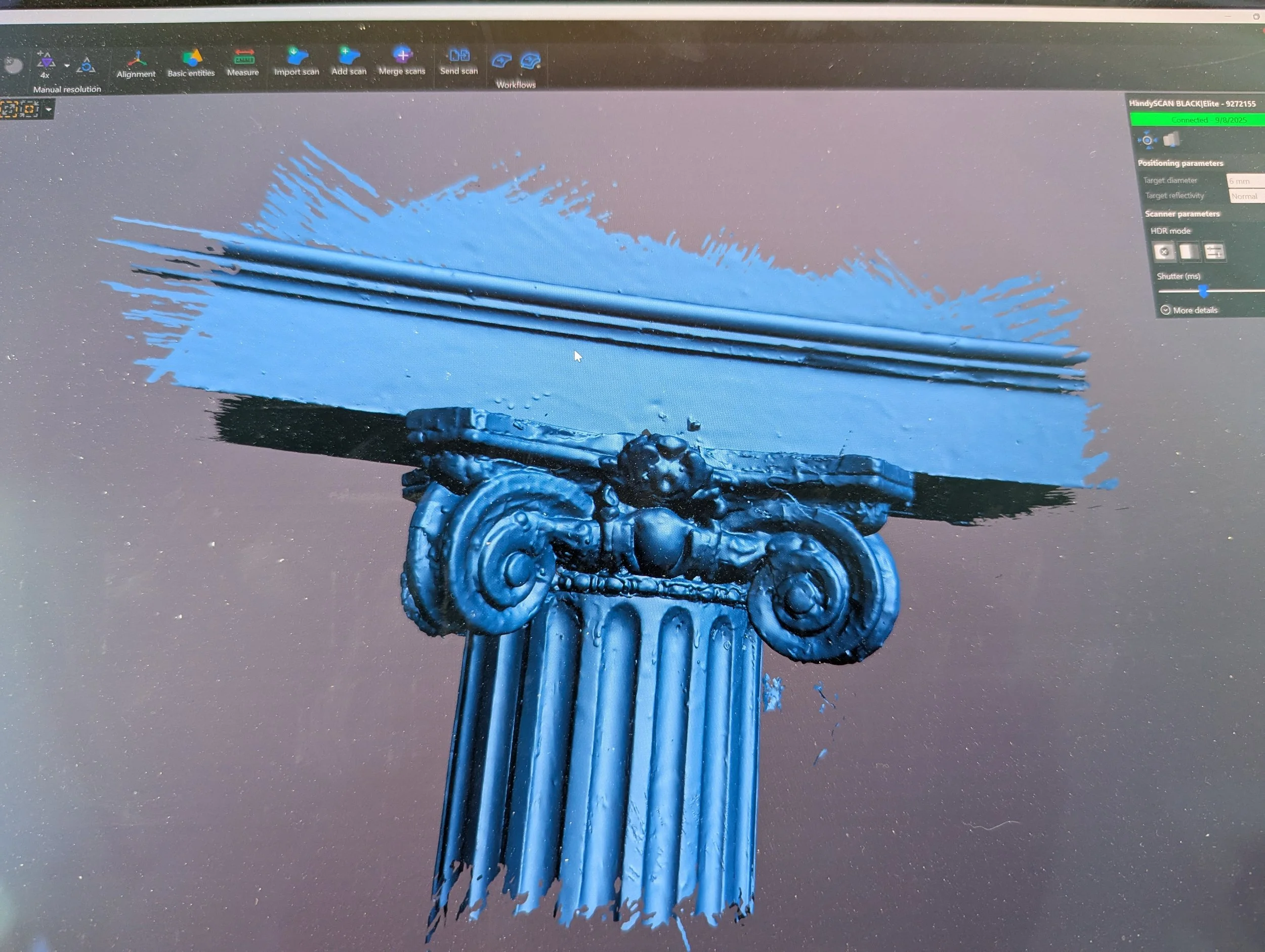
Digital cleanup and axis alignment in VXElements
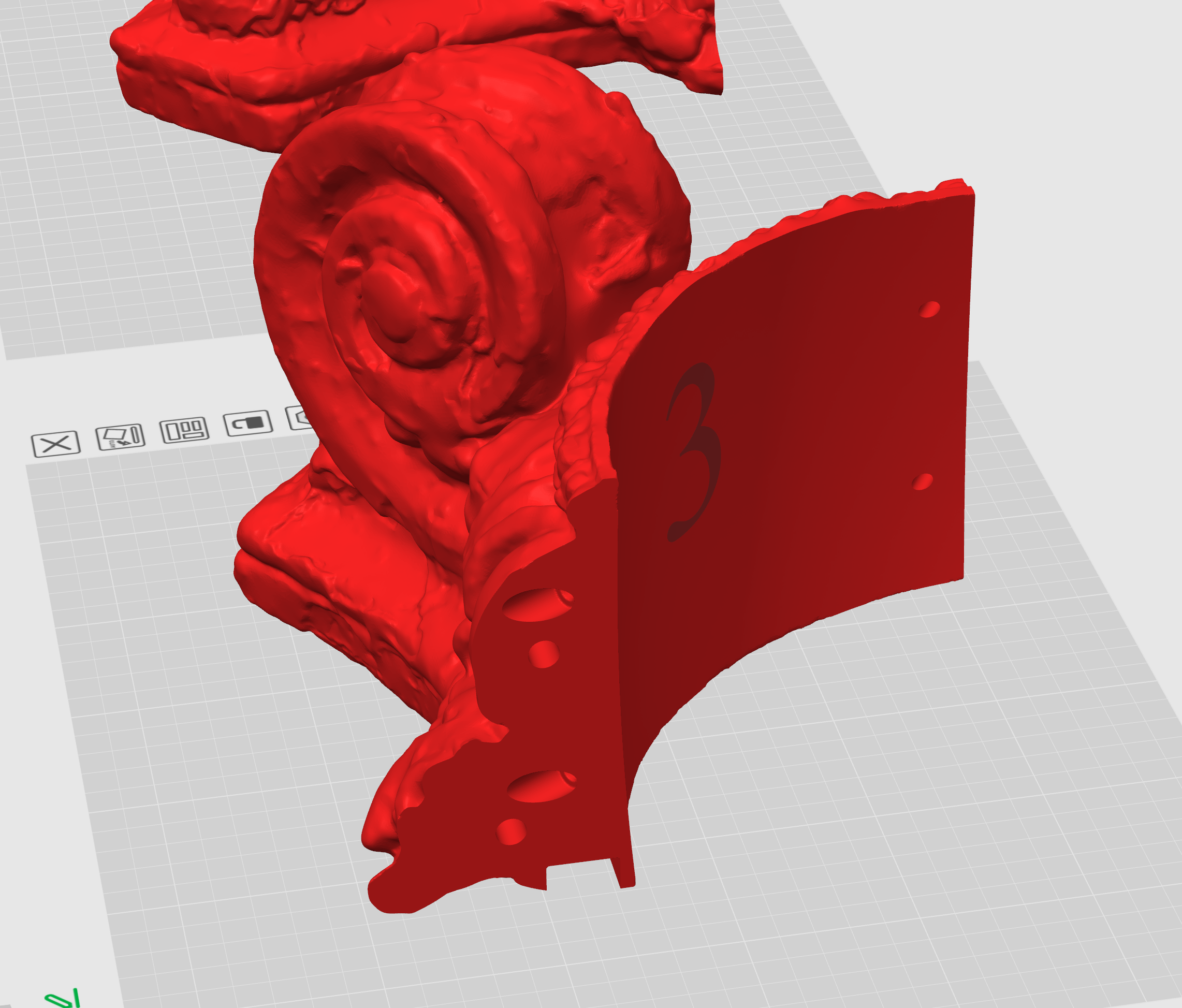
Parametric quadrant segmentation with engineered fastening system
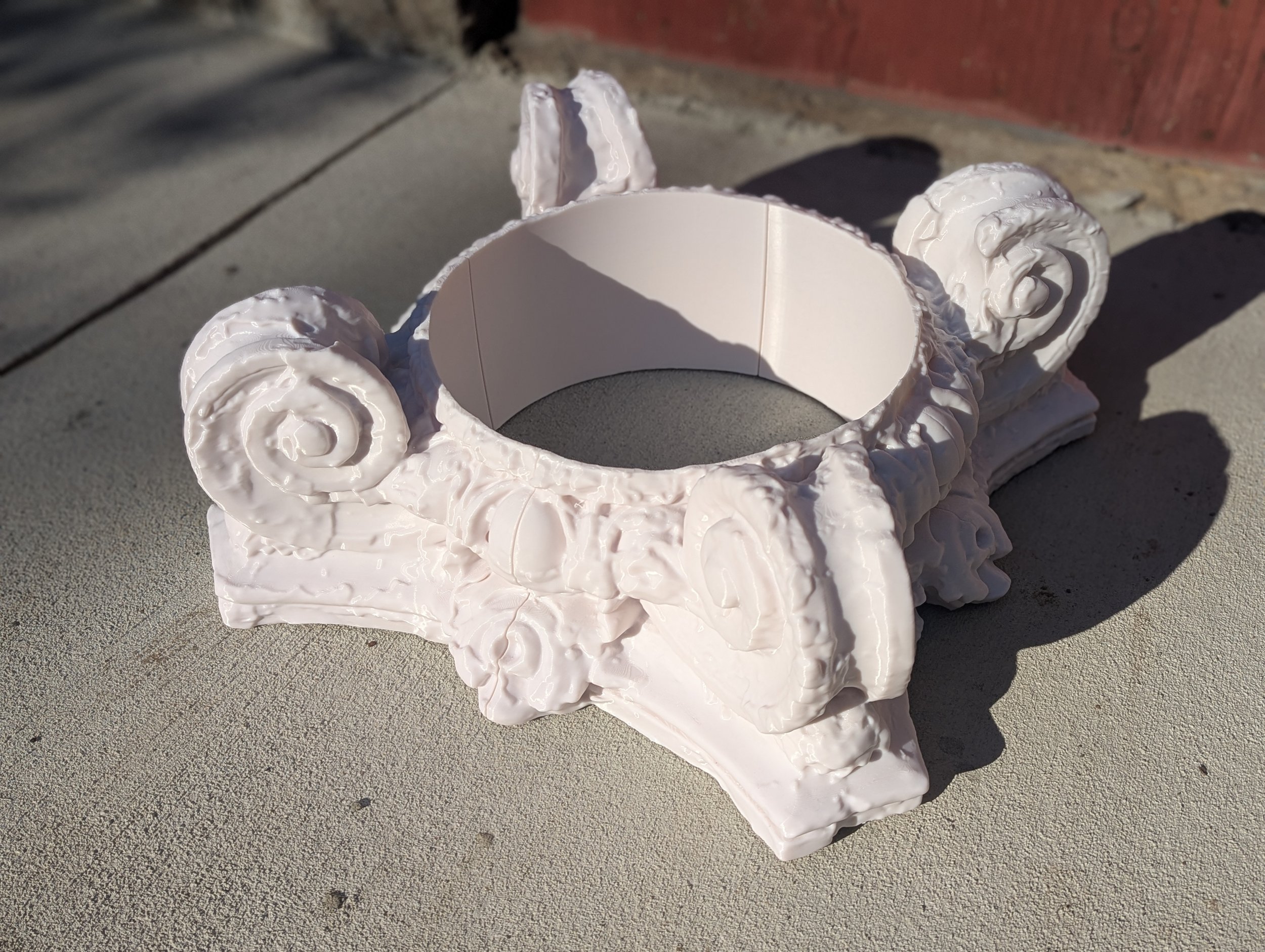
Large-format FDM printing — approximately 4kg ABS per capital
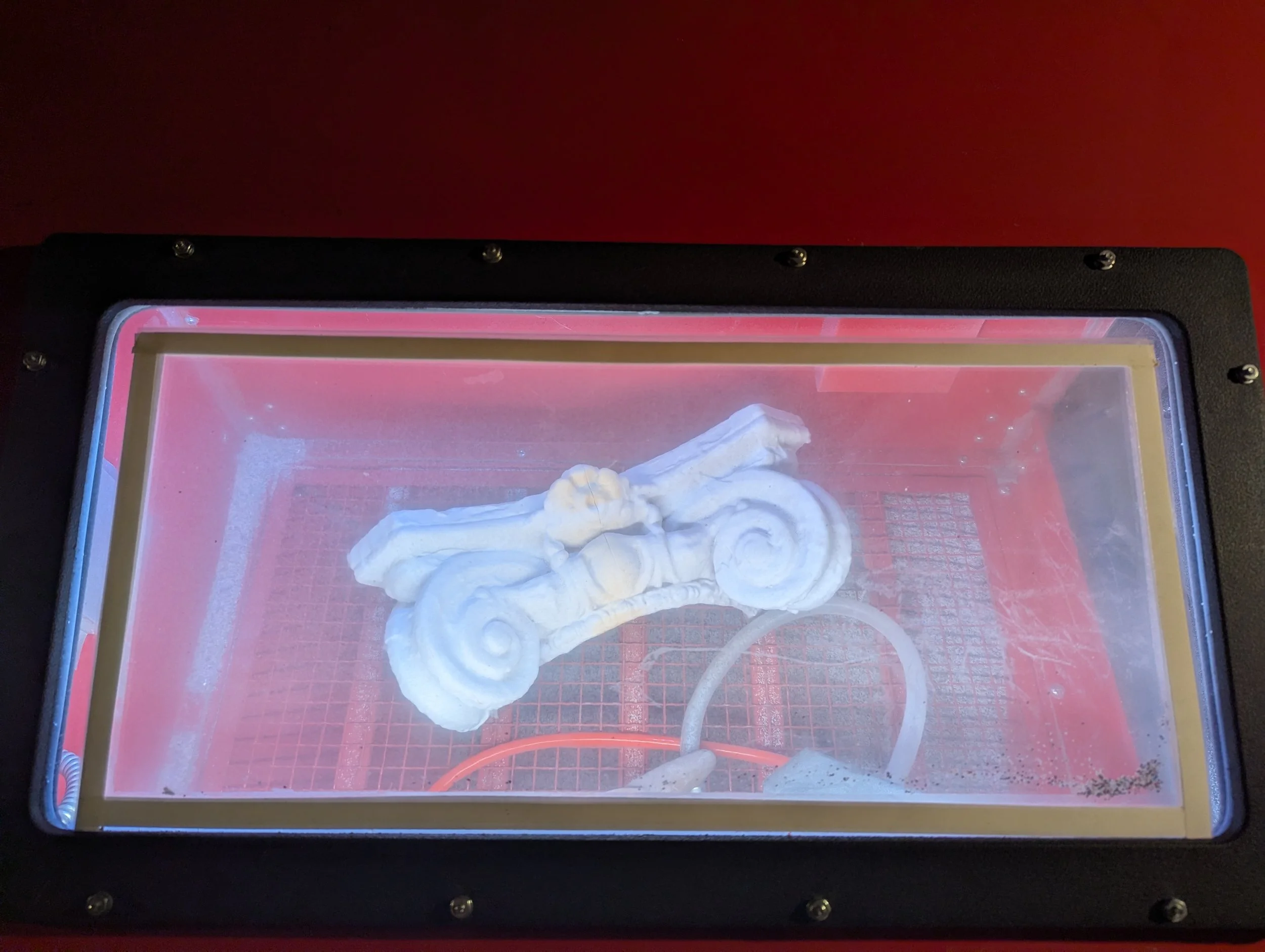
After media blasting — surface texture matches aged painted timber
Project Summary
Scope & Deliverables
| Location | Lockeland Springs Historic District, Nashville, TN |
| Register Status | National Register of Historic Places |
| Capitals Reproduced | 5 (installed alongside 7 surviving originals) |
| Master Scan Source | 1 original surviving capital |
| Scan Accuracy | ±0.025mm — Creaform HandyScan Black Elite |
| Material | ABS — UV stable, moisture resistant |
| Manufacturing | Large-format FDM, 4 quadrants per capital |
| Post-Processing | Media blast, primer-ready surface |
| Cost Per Capital | $1,000 all-inclusive |
| Total Project Cost | $5,000 (5 capitals) |
| Scope Included | Scan, engineering, manufacture, delivery, contractor support |
| Scope Excluded | Installation labor |
| First Article Result | Pass — no iterations required |
| Visual Result | Indistinguishable from originals at 5 feet |
Why This Approach Works
For National Register Properties, "Close Enough" Is Non-Compliance
Historic Zoning Overlay and National Register integrity standards require that replacement elements be consistent with the character and material of the original historic fabric. A visibly new hand-carved capital — however accurate to the original design — fails this standard because it reads as new against century-old material.
3D laser scanning solves this problem definitively. By scanning the aged original rather than the original design, every reproduction inherits the weathered character of the surviving piece. The replacements are not approximations of what the capitals looked like in 1910. They are clones of what the surviving capitals look like today — including 110 years of Nashville weather.
For architects, building contractors, and preservation consultants working on National Register properties in Middle Tennessee, this workflow offers a documented, repeatable approach to compliant ornamental reproduction at a fraction of the cost of traditional hand-carving.
Restoring a Historic Property in Middle Tennessee?
We work with homeowners, architects, and building contractors on National Register and Historic Zoning Overlay projects across Nashville and Middle Tennessee. Consultations are free.
Start a Conversation Historic Preservation Scanning