

Hermitage Crown Molding
Historic Preservation · Nashville · Plaster Molding · Custom Tooling
Water Damage Couldn't
Erase 100 Years of Craft.
A historic home in Hermitage, Tennessee suffered water damage that destroyed original plaster crown molding. Schimmel Engineering scanned a surviving master section, extracted the profile in VXModel, engineered a production DXF in SolidWorks, and collaborated with ACT Machine and Manufacturing to laser cut a custom aluminum running die. Twenty linear feet of replacement molding, indistinguishable from the original. Total cost: $750 for scan, drawing, and tool creation.
The Problem
Original Plaster. Water Damage. No Template Anywhere.
The original plaster crown molding on this historic Hermitage property was not a standard profile. Like most ornamental plasterwork in Nashville's historic homes, it was run in place by craftsmen over a century ago using a custom die specific to this home. No matching profile exists in any catalog. No digital record existed anywhere.
Water damage had destroyed significant sections of the molding. A salvageable master section remained — enough to capture, but not enough to serve as a physical template for traditional re-running. The standard approach of hand-cutting a wood-and-tin die from the remaining section introduces cumulative dimensional error and produces a die that degrades after a single use.
What was needed was a precise digital extraction of the surviving profile, engineering of a production-quality tool, and a die material durable enough to run 20 linear feet cleanly without distortion.
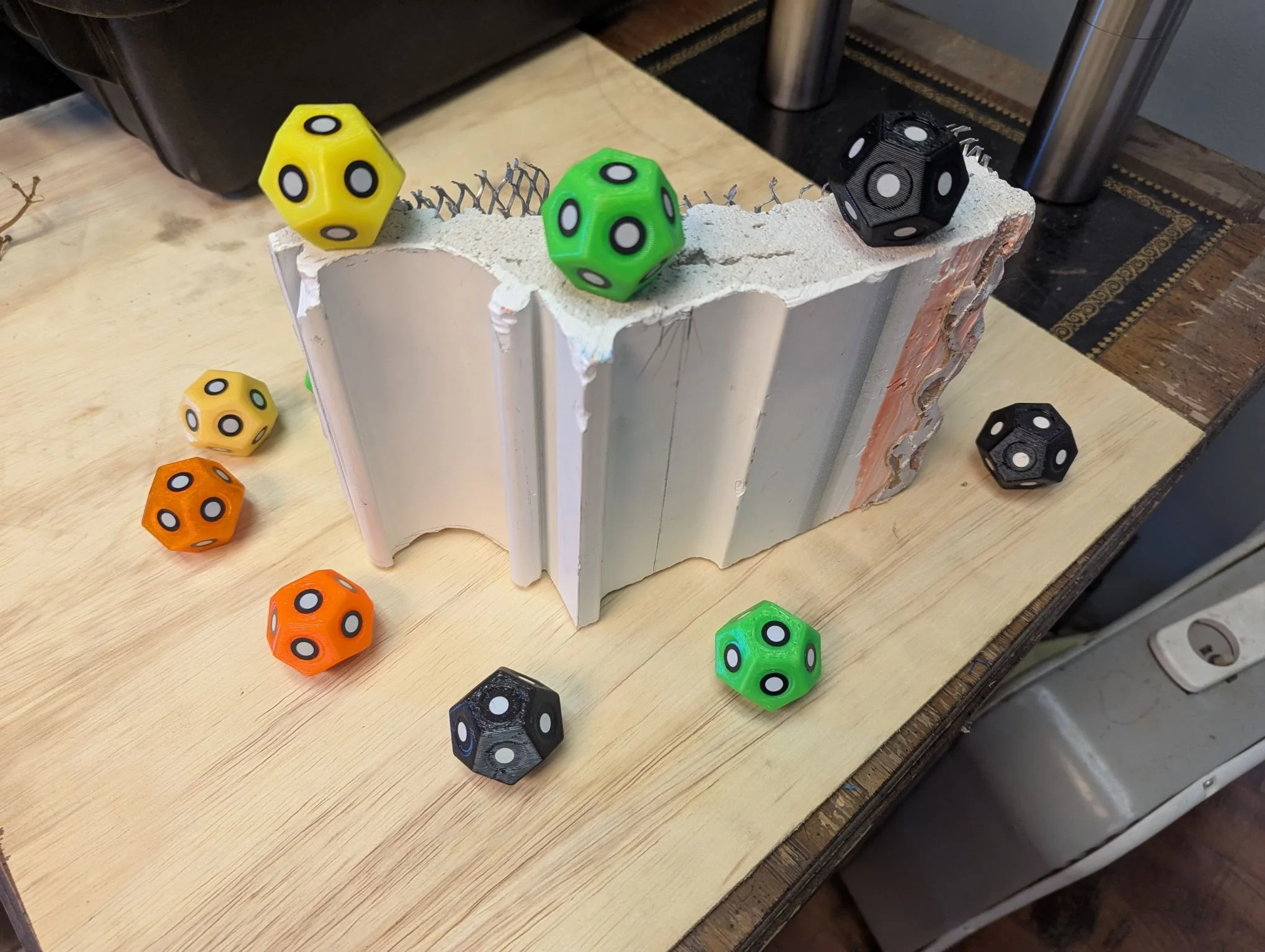
Surviving master section — scanned as the reproduction profile source
The Workflow
Scan → Extract → Engineer → Cut → Run
The surviving master section was carefully removed and scanned using the Creaform HandyScan Black Elite at ±0.025mm accuracy. The full surface geometry was captured in a high-density point cloud — including the subtle nuances of hand-run plaster that define the character of the original profile.
The raw point cloud was cleaned in Creaform's VXElements and VXModel software — removing dust, old paint buildup, and surface contamination while preserving the original profile geometry. A hyper-accurate cross-section was extracted: the exact profile the original craftsman ran, stripped of accumulated coatings.
The extracted profile was brought into SolidWorks and engineered as a production DXF — the cutting file format required for laser cutting. The profile was adjusted to account for the tool offset required by the running technique, ensuring the die produces a clean pull through wet plaster at the correct finished dimensions.
The DXF was handed to Chris Henry at ACT Machine and Manufacturing, a Nashville-area precision fabricator, who laser cut the profile into durable aluminum using Autodesk Fusion toolpaths. Unlike traditional wood-and-tin dies, the aluminum die holds its geometry through the full 20-foot run without deflection or wear — and is preserved for future repair work.
The custom die was delivered to local plaster artisans who ran the replacement molding in place. Pulling the aluminum die over wet plaster produced long, seamless lengths with crisp detail that matched the surviving sections of original trim. The replacement molding was installed continuously with the surviving original — no visible transition.
The aluminum die is the permanent record of this home's molding profile. If additional sections are damaged in the future, the tool exists to reproduce them without starting the scan process over.
Project Documentation
Digital to Analog — The Complete Chain
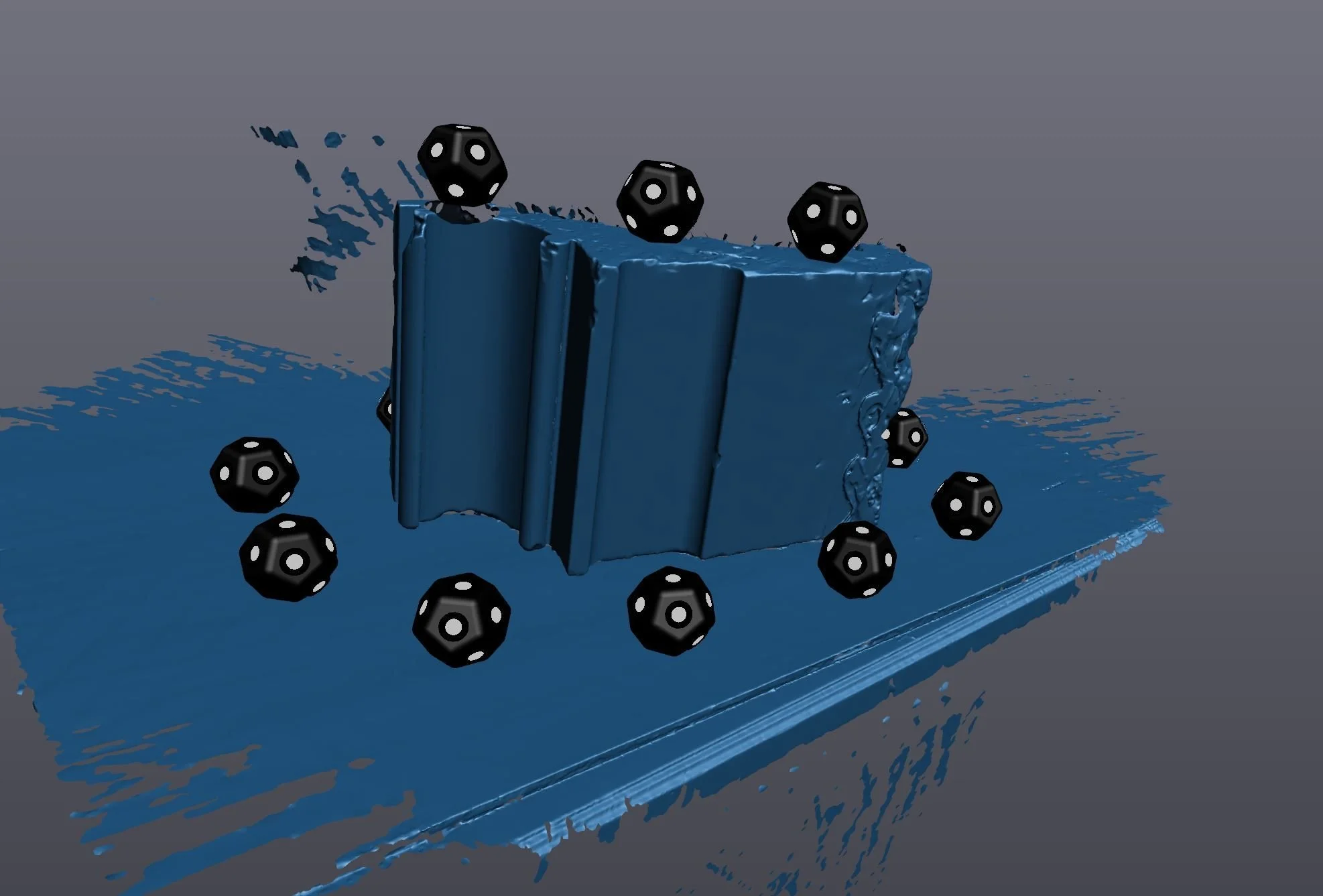
Profile extraction in VXElements — cleaned point cloud cross-section
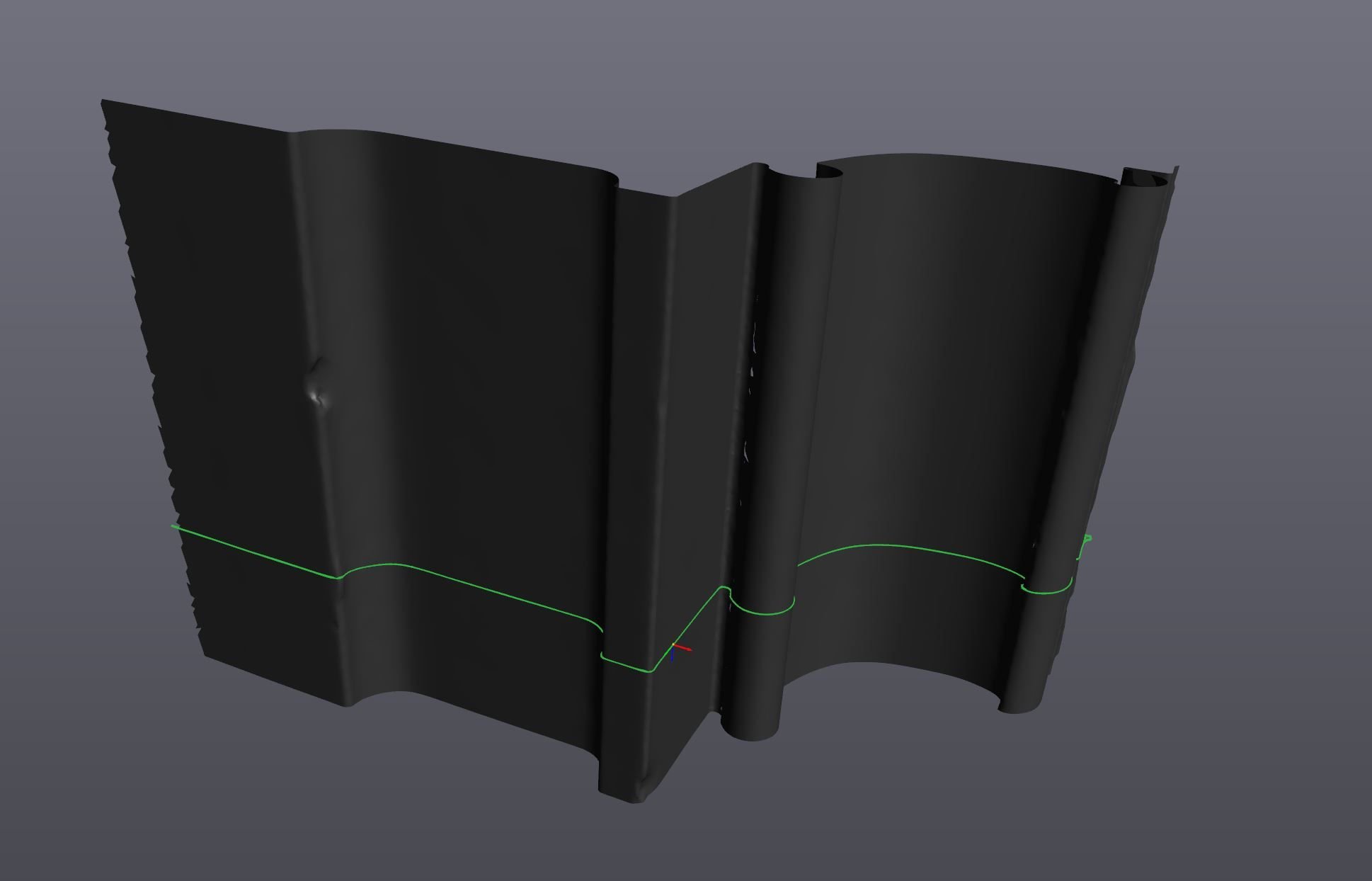
DXF engineering in SolidWorks — production cutting file for aluminum die
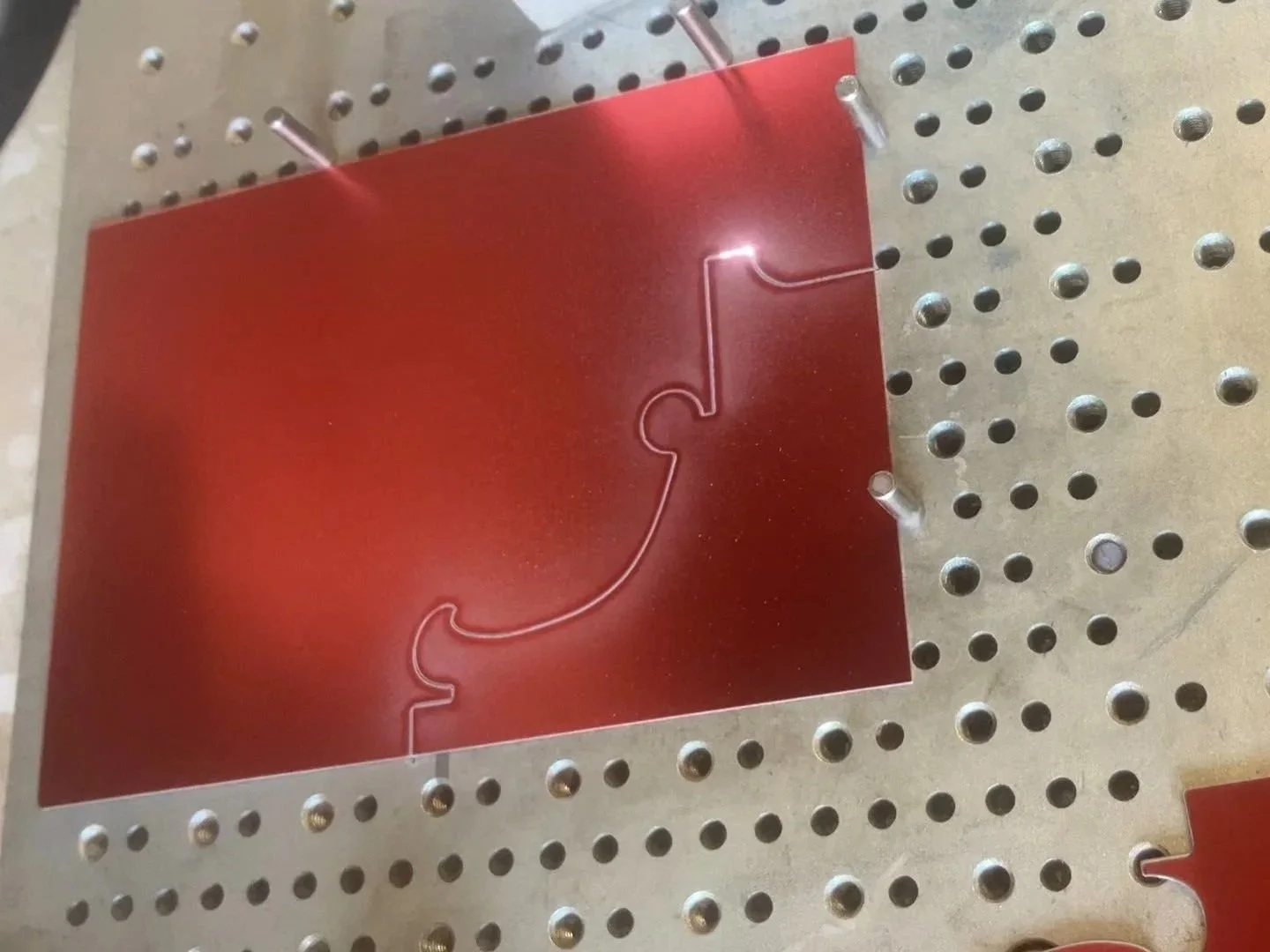
Laser cut aluminum die — fabricated by ACT Machine and Manufacturing, Nashville
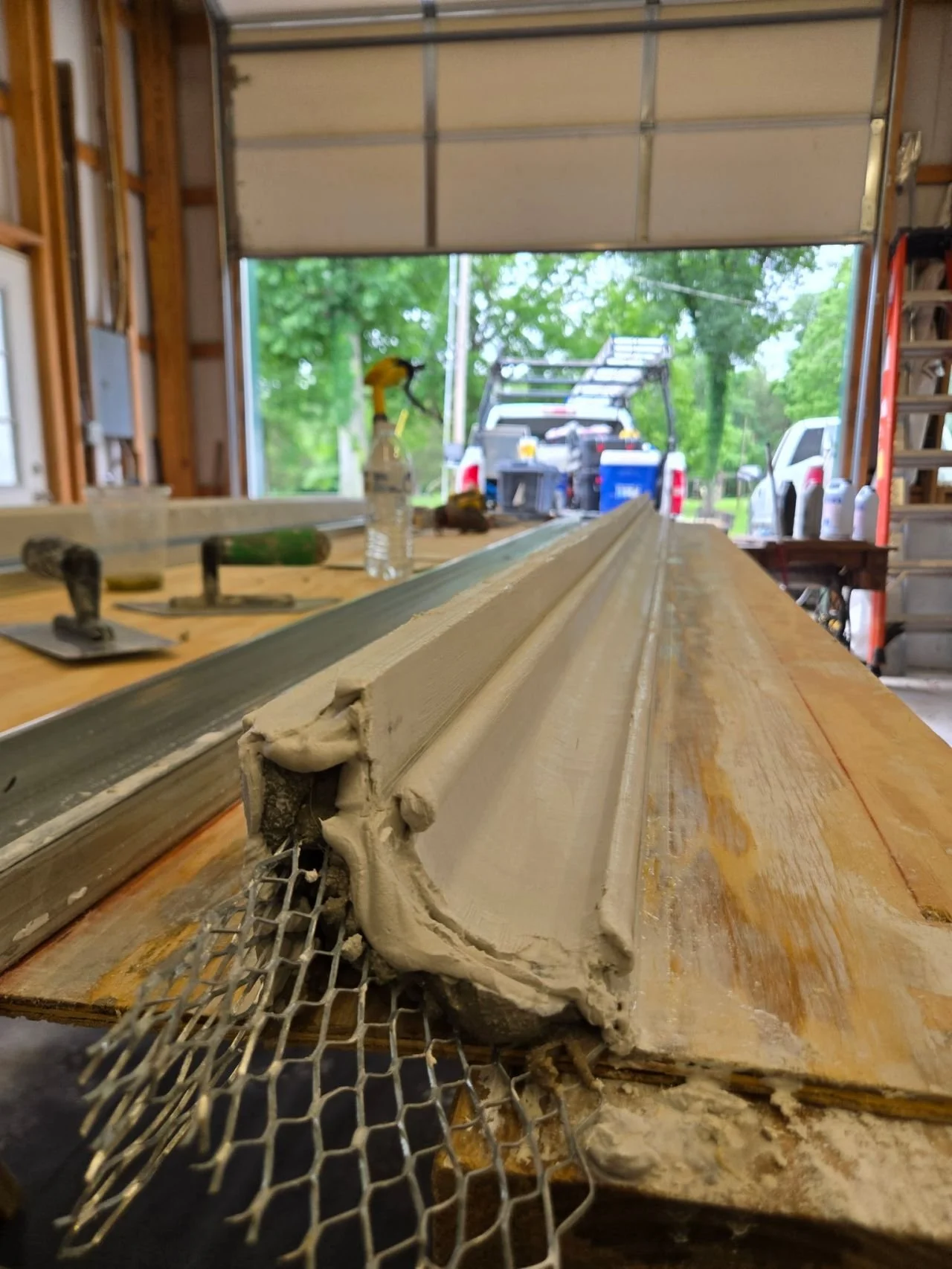
Local plaster artisan running replacement molding with the aluminum die
Project Summary
Scope & Cost
| Location | Hermitage, Tennessee |
| Scope | 20 linear feet of crown molding |
| Scan Equipment | Creaform HandyScan Black Elite, ±0.025mm |
| Software | VXElements, VXModel, SolidWorks |
| Die Material | Laser cut aluminum |
| Die Fabricator | ACT Machine and Manufacturing (Chris Henry) |
| Plaster Running | Local Nashville artisans |
| Schimmel Engineering Cost | $750 — scan, drawing, and tool creation |
| Scope Included | Laser scan, profile extraction, DXF engineering, die fabrication coordination |
| Scope Excluded | Plaster running labor, installation |
| Die Retained | Yes — available for future repairs |
| Result | Continuous replacement — no visible transition to original |
Why Laser Scanning for Molding Reproduction
A Custom Die That Lasts — Not a Template That Doesn't
Traditional molding reproduction relies on hand-cut wood-and-tin templates made directly from the surviving original. These templates are imprecise, degrade through the plaster running process, and cannot be preserved for future use. If more sections are damaged, the process starts over from scratch — assuming the original is still accessible.
The digital-to-aluminum workflow changes this entirely. The scan is the permanent record. The DXF is the permanent tool specification. The aluminum die can run hundreds of linear feet without wear and is stored for future repair. For preservation contractors working on historic properties, this represents a documented, repeatable, and auditable approach to molding reproduction.
For Nashville homeowners and architects working on National Register or Historic Zoning Overlay projects, the cost of the scan-to-tool workflow is typically less than the cost of a single day of traditional template work — and produces a better result every time.
Historic Molding Damaged? We Can Reproduce It.
If you have a surviving section, we can scan it, engineer the die, and coordinate the reproduction. Consultations are free.
Start a Conversation Historic Preservation Scanning