Metrology & Industrial Inspection
When a part comes back from your machinist, how do you know it's right? Schimmel Engineering provides NIST-traceable dimensional inspection using the Creaform HandyScan Black Elite — capturing millions of measurement points across your part's entire surface and comparing them directly to your CAD model. We find what calipers miss, before it becomes a production problem.
What Is the Difference Between AEC Scanning and High-Precision Mechanical Metrology?
AEC (Architecture, Engineering, and Construction) scanning firms typically use LiDAR for site surveys where inch-level accuracy is sufficient. Schimmel Engineering provides high-precision mechanical metrology. Using a blue-light structured-light scanner, we achieve 0.025mm (0.0009 inch) accuracy — making us the right choice for GD&T checks, machine part alignment, and vendor part verification where microns matter more than feet.
Standard inspection tools like calipers and micrometers measure one point at a time. Our scanner captures 1.8 million points per second, producing a complete surface map of your part and comparing it — feature by feature — to the original CAD geometry. The result is a deviation map that shows you exactly where a part is in spec, where it's borderline, and where it failed — across the entire surface, not just the features you thought to measure.

How Does a 3D Scanning Inspection Work?
Every metrology and inspection project follows the same structured workflow — from raw part to actionable deviation report.
Part Setup
No fixtures or special surface preparation required for most parts. The Creaform HandyScan Black Elite handles reflective and black surfaces without scanning spray. Chrome and gloss black paint are not an issue. The scanner operates from battery and can be brought to any facility, inside equipment, or to a remote location.
Full-Surface Capture
The scanner captures a high-density point cloud of your part at 1.8 million points per second. Most single-object inspections take between 10 and 45 minutes to collect data. Lasers are Class 1 and eye safe — no facility shutdown or special safety precautions required.
CAD Alignment & Comparison
The point cloud is aligned to your supplied CAD model in VXElements or VXModel. Best-fit or datum-constrained alignments are available depending on your inspection requirement. Every point on the part surface is compared to the CAD nominal and assigned a deviation value.
Deviation Mapping
A full-field color deviation map is generated — green for in-spec geometry, red/blue for out-of-spec regions. This gives an immediate visual understanding of how the physical part compares to design intent across its entire surface, not just at measured cross-sections.
GD&T Feature Analysis
Individual features — bores, planes, datum surfaces, profiles — are extracted and reported against your GD&T callouts. Stack-up tolerances, true position, flatness, cylindricity, and profile of a surface can all be extracted from a single scan. Reports are formatted for engineering review or supplier communication.
Inspection Report Delivery
You receive a complete inspection report with the deviation map, feature measurements, pass/fail status against drawing tolerances, and the original scan data. Reports are formatted for your engineering team, your quality department, or direct delivery to your vendor as a corrective action document.
What Can Metrology & Industrial Inspection Be Used For?
Schimmel Engineering has applied precision inspection across machined parts, weldments, fabricated assemblies, and production tooling for clients in manufacturing, powersports, automotive, and industrial sectors.
First Article Inspection
Verify the first part produced by a new vendor or new tooling against your engineering drawing before committing to a production run. Our full-surface scan catches dimensional deviations that spot-checking with calipers will miss — and produces a documented report for your quality records or supplier corrective action request.
Vendor Part Verification
When machined parts arrive from a domestic or overseas supplier, don't assume they're correct because they look right. We inspect incoming parts against your CAD model and GD&T drawing, identifying out-of-tolerance features before they reach assembly — preventing costly rework, scrap, and schedule delays downstream.
As-Built vs. CAD Comparison
Compare a fabricated assembly, weldment, or machined component to its intended design. Identify where features have drifted due to welding distortion, thermal growth, or machining error. Generate documentation of actual-as-built conditions for engineering review, warranty claims, or failure analysis.
Machine Part Alignment & Fit Checks
Before committing to assembly, verify that mating components will fit within tolerance. We perform digital fit checks between scanned parts, identifying interference conditions and stack-up issues before they become assembly problems. Used extensively in our own reverse engineering projects to validate designs prior to production.
Tooling & Fixture Inspection
Inspect production tooling, forming dies, and assembly fixtures for wear and dimensional drift over time. Identifying out-of-tolerance tooling early prevents downstream quality escapes and avoids the cost of discovering the problem after a full production run has been scrapped.
Facility & Equipment Documentation
Capture as-built dimensional data for production equipment, facility layouts, and large assemblies. Used for maintenance planning, equipment replacement, and installation verification of new machinery. Our equipment is hand-carry portable and operates from battery — no facility disruption required.
Metrology & Inspection in Practice
Inspection isn't always a standalone service — it's embedded in every project we complete. These are real examples where dimensional verification was critical to the outcome.
Vendor Part Verification · Powersports
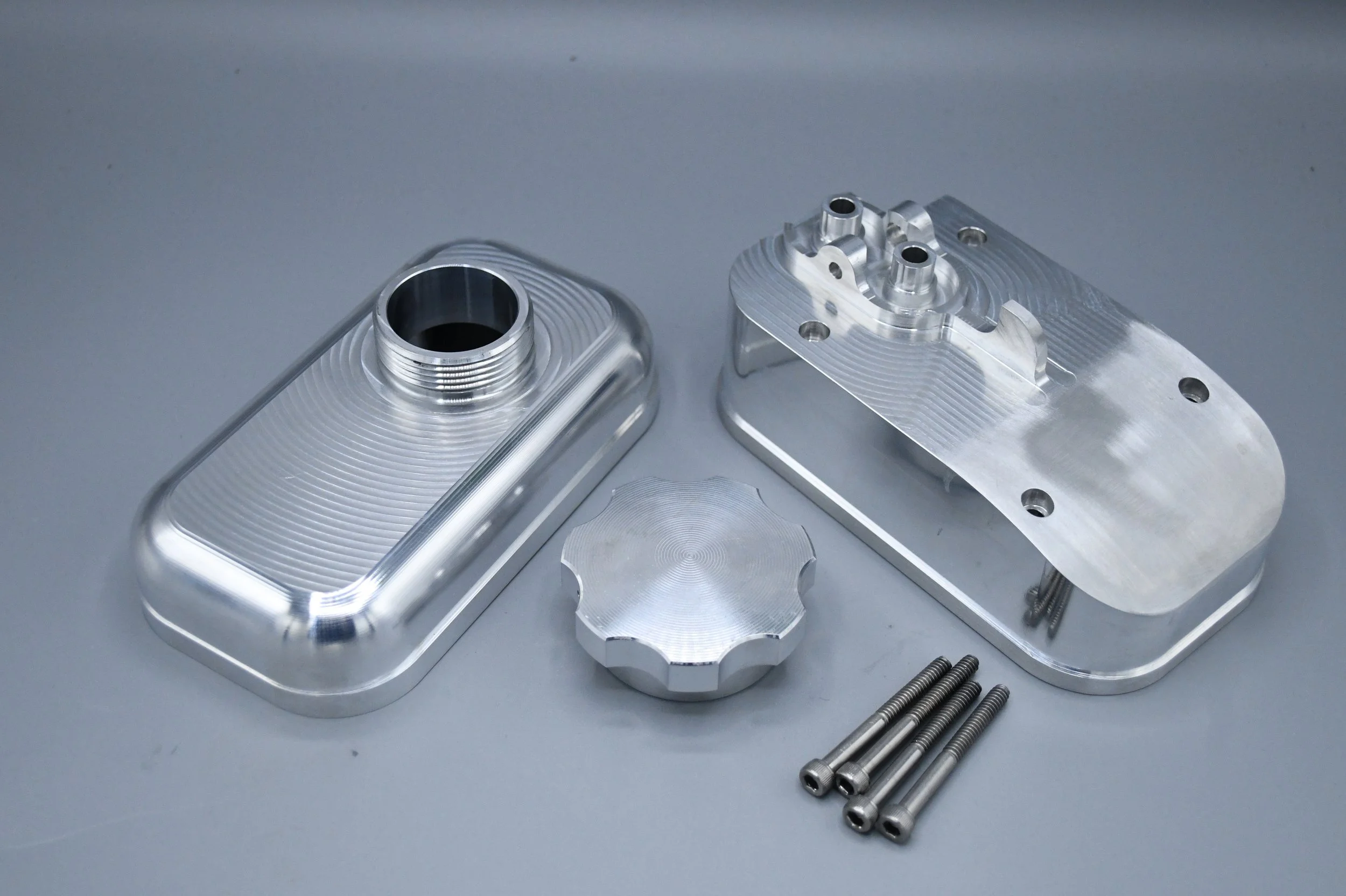
Billet ZA70 Engine Case — First Article & Vendor Inspection
Every machined part in the ZA70 billet engine case production run was inspected against the SolidWorks model using the HandyScan Black Elite — catching vendor deviations before assembly. GD&T was critical to accommodate special bearings and NLA component stack-up tolerances.
View Project →
Industrial Inspection · Manufacturing Facility
Manufacturing Facility Upgrades — White House, Tennessee
We came to fix one problem but identified several more. On-site scanning of a production facility revealed dimensional issues beyond the original scope — preventing downstream failures before they occurred.
Read the Case Study →Metrology & Industrial Inspection — Frequently Asked Questions
What is metrology-grade 3D scanning?
Metrology-grade 3D scanning uses certified, NIST-traceable equipment to capture part geometry at a level of accuracy suitable for engineering inspection and dimensional verification. The Creaform HandyScan Black Elite achieves ±0.025mm (0.0009 inch) volumetric accuracy — appropriate for GD&T checks, first article inspection, and vendor part verification where standard scanning equipment falls short.
What is first article inspection and why does 3D scanning improve it?
First article inspection (FAI) is the dimensional verification of the first part produced by a new vendor or process against the engineering drawing. Traditional FAI uses calipers and CMMs, which are time-consuming and limited to the features you specifically measure. 3D scanning captures millions of points across the entire part surface, producing a full-field deviation map against the CAD model — catching issues traditional methods miss, in a fraction of the time.
Can 3D scanning be used to inspect parts on-site at a production facility?
Yes. The Creaform HandyScan Black Elite fits in hand-carried cases, operates from battery, and can be brought into any facility, inside equipment, or to remote locations. Setup takes minutes. Most single-object inspections take between 10 and 45 minutes to collect data. Lasers are Class 1 and eye safe — no facility shutdown or special safety precautions are required.
What surfaces can you inspect?
The HandyScan handles reflective and black surfaces without scanning spray. Chrome and gloss black paint are not an issue. Glass, water, and clear plastics require surface treatment. There are no fixturing requirements for most parts — the scanner works in any orientation without a fixed coordinate system.
What does metrology and inspection cost?
Inspection services start at $750 and go up from there depending on part complexity, number of features, and reporting requirements. On-site visits include a $390 mobilization fee within 50 miles of Nashville (37206). Note that $130 is our base scanning rate — inspection, GD&T analysis, and formal deviation reporting are a separate, higher-value deliverable. Send us your drawing and we'll estimate quickly.
Where do you provide metrology and inspection services?
Our lab is based in Nashville, TN. On-site inspection visits are available within 50 miles of 37206 starting at $390, and we travel nationally and internationally with advance notice — our equipment is hand-carry portable. For individual parts, mail-in inspection eliminates travel cost entirely and is available to clients worldwide.
Nashville, TN — On-Site Inspection or Mail Parts Directly to Our Lab.
On-site visits start at $390 within 50 miles of zip code 37206, with inspection services starting at $750. We travel nationally and internationally with advance notice.
Need a Part Inspected?
Send us your drawing and a description. We'll tell you exactly what inspection can confirm — and what it will cost.